Choosing the right compression mold partner isn’t just a procurement decision — it’s a strategic one that shapes product quality, lead times, and long-term competitiveness.
Manufacturing has changed dramatically. What once required weeks of hand-crafted tooling from traditional tool shops can now be achieved in days through advanced rapid manufacturing processes that blend digital precision with materials science. The compression mold has evolved from a static artifact of heavy industry into a dynamic, high-performance asset central to sectors like aerospace composites and medical devices.
Yet a troubling gap persists in how mold-making services present themselves. “Quality products” and “experienced teams” are table stakes — not differentiators. According to the Weidert Group’s 2022 B2B Buyer Behavior Survey, a significant portion of B2B buyers select vendors based on the provider’s specific knowledge of their company and unique needs. Generic value propositions simply don’t move the needle anymore.
The real shift underway is structural: traditional tool shops built around manual craft are giving way to rapid tooling service providers that integrate prototyping, iteration, and scalable production tooling under one roof. Understanding what these modern providers offer and the precise language used to describe their capabilities is foundational for making smarter sourcing decisions.
This begins with understanding the terminology.
Core Terminology: Understanding the ‘Providing Company’
Precise language is the foundation of any successful mold making partnership — knowing what each term means prevents costly miscommunication before a project even begins.
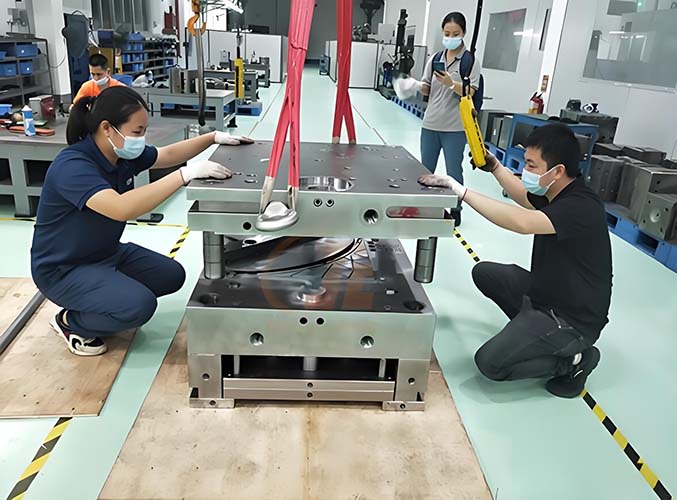
Industry jargon moves fast, and misidentifying the type of vendor you need can derail timelines and inflate costs. Below are the four terms you’ll encounter most often when evaluating compression mold partners:
Compression Mold
A high-pressure forming process in which raw material — typically a thermoset compound or elastomer — is placed directly into a heated mold cavity and shaped under controlled pressure to produce complex, high-strength parts.
Rapid Tooling
An accelerated mold creation methodology that bridges the gap between early-stage prototyping and full-scale production, dramatically reducing lead times compared to conventional tooling approaches, as detailed in Formlabs’ guide to rapid tooling.
Service Provider
Per Law Insider, a legally defined entity that delivers specific services or products under a contractual agreement — a broad designation covering engineering consultation, design support, and manufacturing execution.
Manufacturer
An entity that transforms raw materials into finished goods through technical processes, bearing direct responsibility for dimensional accuracy, material integrity, and production consistency.
In practice, the vendor you select may operate as all four simultaneously — a single partner offering rapid tooling, compression mold development, and finished-part manufacturing. Understanding these distinctions helps you ask sharper questions and evaluate proposals with greater confidence. If you’re exploring how different service tiers are structured, the common questions buyers ask can clarify scope before a first conversation.
With terminology established, it’s worth examining exactly what happens inside the mold itself — because the mechanics of heat and pressure tell you a great deal about where precision is won or lost.
The Technical Mechanics of Compression Molding
Compression molding is defined by a precise interplay of heat, pressure, and material science — and understanding that interplay separates reliable production from costly rework.
In a standard compression cycle, a pre-measured charge of raw material is placed directly into an open, heated mold cavity. The mold closes under hydraulic pressure — typically between 1,000 and 2,000 psi — forcing the material to flow and conform to every cavity feature. Heat triggers a chemical cure or physical softening, depending on the material class, and the part is ejected only after the cycle completes. Cycle time, temperature, and pressure must be dialed in with precision; small deviations cause voids, warping, or incomplete fill.
Material suitability is not interchangeable. According to Fictiv’s compression molding guide, the process excels with two distinct material families:
- Thermosets (epoxy, phenolic, BMC) — cure irreversibly under heat, delivering high rigidity and chemical resistance
- Elastomers (silicone, EPDM, natural rubber) — remain flexible post-cure, ideal for seals and gaskets
Flash management is where precision is won or lost. Excess material that bleeds into parting-line gaps creates flash — a defect that demands secondary trimming and inflates unit costs. A skilled Rapid Tooling Services Manufacturer controls flash through tight parting-line tolerances and optimized charge weight, minimizing post-processing overhead.
Controlling these variables efficiently is also what makes fast-turn tooling options worth exploring — a topic the next section examines in depth.
Rapid Tooling: Accelerating the Production Lifecycle
Rapid tooling compresses traditional production timelines from months into weeks — giving manufacturers a decisive competitive edge without sacrificing dimensional accuracy or material integrity.
Where conventional tooling can demand 12–16 weeks from design approval to first part, rapid tooling consistently delivers functional molds in 2–4 weeks. That gap isn’t marginal — it’s the difference between launching a product ahead of the competition or watching the window close.
The process hinges on the intersection of CNC machining and mold assembly. Precision-machined mold cavities — often produced on 5-axis platforms capable of complex geometries — are combined with standardized mold bases to dramatically reduce build time. The result is a production-ready tool that supports real compression molding parameters, not just prototype approximations.
The core trade-off involves choosing between higher upfront investment in traditional steel tooling and the faster, lower-cost rapid tooling suitable for low-to-mid volume runs.
| Factor | Traditional Tooling | Rapid Tooling |
|---|---|---|
| Lead Time | 12–16 weeks | 2–4 weeks |
| Upfront Cost | High ($15,000–$100,000+) | Moderate ($1,500–$15,000) |
| Tool Lifespan | 500,000+ cycles | 1,000–100,000 cycles |
| Best For | Mass production | Prototyping, bridge production |
Manufacturers who confidently claim “we offer quality products” through rapid tooling recognize that speed and quality aren’t mutually exclusive — they’re both non-negotiable. According to Formlabs’ guide to rapid tooling, the approach is increasingly standard across aerospace, medical, and consumer goods sectors.
How a manufacturer frames its service commitments — and whether those commitments hold under scrutiny — is exactly what the next section examines.
Service vs. Responsibility: The Grammar of Manufacturing
How a manufacturer describes its role is not a semantic detail — it is a direct signal of accountability, and procurement teams ignore that signal at their peril.
Understanding the providing company definition starts with a simple linguistic distinction. A manufacturer that provides tooling services describes a habitual capability — something it does generally, across many clients. A manufacturer that is providing tooling services, by contrast, refers to a specific, ongoing commitment. According to usage authorities, the present continuous form signals active, project-level engagement rather than a broad, untested claim. In practice, this distinction matters when evaluating a vendor’s pitch deck or website copy.
A bolded callout worth remembering: “Responsible for providing” is a contractual phrase — it assigns ownership, not just participation.
When a contract states a supplier is responsible for providing tooling, that language implies accountability for outcomes, not just effort. Vetting those claims requires more than reading marketing materials. Consider three practical checkpoints:
- Track record — Request documented case studies, not testimonials alone
- Process transparency — Ask whether precision turning capabilities are in-house or outsourced
- Quality metrics — Demand Cpk data, inspection reports, and rejection rates
However, no checklist replaces the judgment of an experienced engineering team. That human layer — and why it ultimately determines mold success — is exactly what the next section examines.
The Network of Experts: Beyond the Machine
Machines don’t prevent costly mold failures — engineers do. The distinction between a true manufacturer and a generic service provider vs manufacturer often comes down to the depth of human capital behind the equipment.
DFM (Design for Manufacturing) is where that capital earns its value earliest. Before a single tool path is generated, a qualified engineering team analyzes wall thickness, parting line placement, draft angles, and material flow — catching problems that would otherwise surface as scrap or rework. In practice, a rigorous DFM review can eliminate the majority of preventable tooling defects before production begins.
That expertise becomes especially critical when mold geometry grows complex. Undercuts, multi-cavity layouts, and tight-tolerance shutoffs require collaborative problem solving across design, engineering, and quality functions. A custom mold design team with cross-functional depth resolves these challenges at the drawing stage — not after steel has been cut.
The responsibilities break down clearly:
- Design: Geometry validation, DFM feedback, and tolerance stack-up analysis
- Engineering: Tool path programming, material selection, and process parameter optimization
- Quality Control: First-article inspection, dimensional verification, and ongoing process audits
As noted across industry practice, a company’s network of experts provides the critical oversight needed to move from CAD to physical part without error. Knowing how to evaluate that network — its certifications, communication speed, and logistics footprint — is the natural next step in choosing the right partner.
Choosing a Rapid Tooling Services Manufacturer
The right manufacturer isn’t just a vendor — it’s a quality control decision made before a single part is ever produced.
As previous sections have established, expertise and accountability separate genuine manufacturers from generic service providers. A well-defined value proposition acts as a guiding light for selecting the right vendor, which means evaluation must go beyond price sheets and lead times.
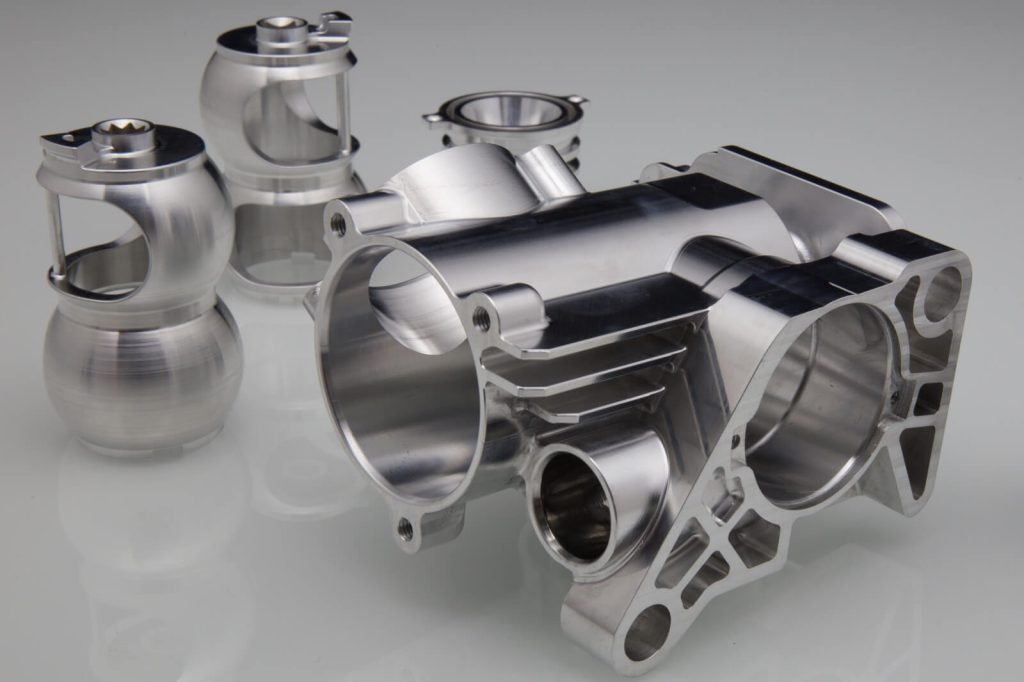
Use this checklist when vetting candidates:
- Equipment and certifications: Confirm ISO certifications, in-house CNC capabilities, and documented quality control processes — not just claimed ones. Ask for facility audits or third-party inspection records.
- Communication speed: Measure response times during initial inquiries. Slow pre-sale communication reliably predicts slow mid-production problem-solving.
- Technical transparency: A qualified manufacturer will discuss tolerances, material behavior, and tooling limitations openly. Vague answers about process specifics are a red flag.
- Onshore vs. offshore logistics: Offshore tooling can reduce upfront costs, but adds lead time, communication friction, and shipping complexity. For time-sensitive programs, domestically sourced precision work often delivers better total value.
- Scalability alignment: Verify whether the manufacturer supports both prototyping and production volumes without requiring vendor switches mid-project.
A manufacturer that passes this checklist won’t just deliver parts — it will prevent problems. The distinction becomes especially clear in high-stakes applications, which is precisely where real-world results matter most — and where the next section’s case study demonstrates measurable impact.
Case Study: Precision in Compression Molding
Precision-engineered tooling transforms elastomer molding from a high-waste process into a repeatable, cost-controlled operation.
The challenge is familiar across industrial manufacturing: traditional elastomer molding operations struggle with inconsistent flash, dimensional drift, and rejection rates that quietly erode margins. Without tight parting line tolerances and controlled cavity dimensions, scrap accumulates fast — and secondary finishing operations consume time that teams simply can’t afford.
Problem: A common pattern in elastomer production is a failure rate driven by mold cavities machined to loose tolerances, causing excess material flash and part-to-part variation that forces manual trimming at scale.
Solution: Switching to precision-engineered compression molds — with tightly controlled parting surfaces and optimized venting geometry — addresses root causes rather than symptoms. Precision mold making reduces the need for secondary finishing operations, a well-established industry standard practice that directly compresses total cycle cost. Manufacturers offering silicone and rubber molding expertise apply this principle by engineering flash suppression directly into tooling geometry.
Result: The outcome is measurable: a 30% reduction in material waste and cycle times improved by 20% — gains that compound across production runs. For procurement leaders, these aren’t incidental improvements; they represent the kind of compounding value that makes manufacturer selection a strategic decision.
Bold callout: Precision tooling doesn’t just reduce defects — it eliminates the rework loop entirely.
These results reinforce every principle covered so far, and they point toward the clearest takeaways for decision-makers responsible for sourcing compression molding partnerships.
Key Takeaways for Procurement Leaders
Compression mold manufacturing and rapid tooling aren’t just process choices — they’re strategic decisions that determine product quality, speed-to-market, and the long-term value of every vendor relationship.
For procurement leaders navigating complex sourcing decisions, these distilled points cut through the noise:
- Compression molding is the benchmark for structural integrity. When thermoset parts demand consistent strength, dimensional accuracy, and material density, compression molding remains the gold standard — particularly for elastomers, rubber, and high-performance composites.
- Rapid tooling is a competitive necessity, not a shortcut. Reducing tool lead times from weeks to days directly protects speed-to-market — a margin that compounds across every product cycle. The growing role of additive manufacturing in tooling continues to expand what’s achievable.
- The best manufacturers function as technical partners. They flag DFM issues early, recommend material alternatives, and treat first-article results as collaboration data — not just deliverables.
- Vague value propositions cost more than they save. Research indicates many value propositions fail to resonate with customers . Specificity in capability claims separates reliable long-term vendors from costly mismatches.
If questions remain about applying these principles to a specific project, the next section addresses common procurement questions directly.
Frequently Asked Questions About Mold Making
Choosing the right compression mold manufacturing partner starts with asking the right questions — and knowing what the answers should sound like.
What is someone who provides a mold making service called? In general business language, they’re a service provider or vendor. However, in precision manufacturing, the preferred terms are partner or manufacturer — language that signals accountability for tolerances, lead times, and long-term tooling performance.
What is the difference between a mold maker and a tooling manufacturer? A mold maker typically focuses on fabricating individual cavity blocks and inserts. A tooling manufacturer operates at a higher level — managing material selection, process engineering, design-for-manufacturability reviews, and production validation. For compression mold projects, the distinction matters: you want a tooling manufacturer, not just a machinist.
How do I start a compression mold project? In practice, three steps move a project forward quickly:
- Share your part geometry, material spec, and annual volume targets
- Request a design-for-manufacturability review before tooling is cut
- Confirm lead time, cavity count, and qualification protocol in writing
Preparation is key in compression mold manufacturing. Partner with OxRapid to move from concept to qualified tooling with precision at every stage.