“Die casting is the shortest distance between raw material and finished product.” — American Foundry Society
Precision die casting has quietly become one of the most strategically critical manufacturing processes of the 21st century, streamlining multiple machining stages into a single, repeatable operation that moves molten metal directly to a near-finished component.
The shift from commodity casting to high-precision engineering is the defining story of this industry’s last two decades. Early casting operations prioritized volume over accuracy. Today, manufacturers demand both simultaneously. Modern tooling, real-time process monitoring, and advanced alloy science have transformed die casting from a rough-shaping technique into a discipline capable of holding tolerances that rival CNC machining — at a reduced per-unit cost. For engineers designing components at scale, that combination is difficult to ignore.
Net-shape manufacturing is the concept driving this evolution. When a cast part exits its die requiring minimal or zero secondary machining, the cumulative savings across a production run become significant. Scrap rates drop. Cycle times compress. Supply chains tighten. This is the core promise of high-pressure precision tooling — geometry that is engineered in once, then reproduced thousands of times with near-identical fidelity. In practice, every degree of net-shape completion recovered from post-processing translates directly to margin.
The market numbers validate the momentum. According to Allied Market Research, the global die casting market is projected to reach $104.1 billion by 2032, driven by a 5.6% CAGR. That trajectory reflects surging demand from automotive electrification, consumer electronics miniaturization, and aerospace lightweighting — three sectors that share an uncompromising requirement for precision at volume. For supply chain planners, a growing and maturing die casting ecosystem means more qualified suppliers, more stable lead times, and deeper engineering collaboration available from the outset.
Understanding how that precision is actually achieved starts with the most capable process in the category — high-pressure die casting.
High-Pressure Die Casting (HPDC): Engineering Thin-Walled Complexity
HPDC transforms molten metal into precision-engineered components by forcing material into hardened steel dies at pressures exceeding 10,000 psi — delivering complexity and consistency that no other casting method can match.
The core mechanic is speed and force. Molten metal enters a shot chamber, then a hydraulic plunger drives it into a sealed die cavity at high velocity. The metal solidifies within seconds under sustained pressure, capturing every feature of the tool geometry — threads, channels, bosses, and undercuts included. This rapid solidification minimizes porosity and produces a dense, uniform microstructure.

Where HPDC truly separates itself is in dimensional resolution. According to the North American Die Casting Association (NADCA), HPDC can achieve wall thicknesses down to 1.5mm while maintaining full structural integrity — a capability that gravity casting and sand casting simply cannot replicate at production scale. Sand casting, by contrast, introduces variability through porous mold media and slower fill rates, which limits both surface accuracy and minimum wall geometry.
Surface finish is a defining advantage for demanding applications. Components destined for electronics enclosures or aerospace housings require tight tolerances and a smooth surface that reduces post-machining time. HPDC routinely achieves Ra values below 1.6μm straight from the die — compare that to the rough, grainy texture that sand casting produces. For manufacturers working across multiple industries, from consumer electronics to automotive assemblies, that as-cast surface quality directly reduces downstream cost.
Key HPDC advantages over traditional casting methods include:
- Tighter dimensional tolerances — typically ±0.1mm vs. ±1mm or more with sand casting
- Higher production throughput — cycle times measured in seconds, not minutes
- Near-net-shape output — minimal machining stock required
- Excellent surface finish — suitable for direct assembly in electronics and aerospace
- Thin-wall capability — enables lightweight designs impossible with gravity methods
That thin-wall capability becomes especially consequential when paired with the right alloy — which is exactly why aluminum die casting has emerged as the dominant choice for weight-critical structural parts.
The Aluminum Advantage: Lightweighting the Future
Aluminum is a dominant structural material in modern manufacturing because it uniquely combines low density, high strength, and exceptional thermal performance at a scalable production cost.
Weight reduction isn’t just an engineering metric — in the EV era, it’s a direct measure of competitive advantage.
Aluminum’s dominance in automotive die casting is built on a straightforward structural case. According to the International Aluminium Institute, aluminum die casting can reduce the weight of automotive structural components by up to 40% compared to steel. For a mid-size vehicle, that savings translates to hundreds of pounds removed from the chassis, suspension brackets, and powertrain housings — without sacrificing load-bearing integrity.
The EV correlation makes that 40% figure even more consequential. Every pound eliminated from an electric vehicle’s body structure directly reduces the energy demand on its battery pack. In practice, lighter chassis components allow engineers to either extend range on the same battery capacity or reduce battery size — and therefore cost — while maintaining the same range target. For automakers racing toward 300-plus-mile range benchmarks, aluminum die casting isn’t a material preference; it’s a systems-level strategy.
Thermal conductivity adds another layer of value that steel simply can’t match. Aluminum conducts heat roughly four to five times more effectively than steel, making it the natural choice for heat sinks, battery enclosures, and power electronics housings in EVs. As onboard electronics grow more power-dense, thermal management becomes a critical design constraint — and aluminum die-cast components address it without adding secondary cooling systems.
It’s worth noting that aluminum isn’t the right answer for every application. Where dimensional tolerances are extremely tight and part geometry is small, other alloys enter the equation. That’s exactly where the conversation turns to the precise, tool-friendly world of zinc die casting — an alloy category that brings its own compelling economics and performance profile to the precision manufacturing toolkit.
Zinc and Beyond: Selecting the Right Alloy for Precision
Alloy selection is one of the highest-leverage decisions in high pressure die casting — it directly shapes tool life, cycle time, and cost-per-part across the entire production run.
| Alloy | Key Benefit | Typical Application |
|---|---|---|
| Zinc | Long tool life, fine detail, fast cycles | Connectors, gears, small housings |
| Aluminum | Lightweight, strong, corrosion-resistant | Structural brackets, EV battery trays |
| Magnesium | Highest strength-to-weight ratio | Aerospace frames, wearable device chassis |
Zinc’s key advantage is precision at scale. Because zinc melts at a significantly lower temperature than aluminum, die wear accumulates far more slowly — according to NADCA, this translates into longer tool life and faster cycle times, both of which compress cost-per-part on high-volume runs. In practice, zinc dies can sustain output well beyond what aluminum tooling typically tolerates before requiring maintenance or replacement. For small, intricate components — connectors, micro-housings, fine-thread inserts — zinc’s low viscosity at casting temperature allows it to fill thin walls and sharp features with exceptional repeatability. If you’re evaluating alloy options for a complex small-part geometry, exploring common process questions early can prevent costly material pivots later.
Aluminum remains the dominant choice where structural performance and weight savings converge — a point the previous section explored in depth. However, the aluminum-vs-zinc decision often comes down to part size and required tool longevity rather than mechanical properties alone. On the other hand, when engineers need to push weight reduction even further than aluminum allows, magnesium enters the picture. With the best strength-to-weight ratio of any structural die casting alloy, magnesium suits applications where every gram matters — think aerospace interior components, advanced robotics housings, and next-generation wearable device frames.
Choosing correctly between these alloys requires understanding not just material properties, but how each one interacts with tooling over thousands of shots. That relationship between alloy behavior and die performance points directly to the engineering discipline behind the tooling itself.
Die Casting Tooling: The Foundation of Repeatability
Die casting tooling is where engineering ambition meets physical reality — and every dimensional tolerance, surface finish, and cycle time target is won or lost at the die design stage.
H13 tool steel is the industry standard for die construction, and for good reason. Its exceptional hot-hardness, thermal fatigue resistance, and toughness allow it to withstand the repeated thermal shock of molten metal injection at pressures exceeding 10,000 psi. H13 dies routinely achieve 100,000+ shots before requiring significant refurbishment — a critical threshold for long-run production economics.
Simulation before steel cutting is now a non-negotiable step in professional tooling development. MagmaSoft and comparable simulation platforms allow engineers to model metal flow, predict porosity hotspots, and identify thermal imbalances across the die cavity — all before a single machining pass is made. What typically happens without this step is costly: tooling modifications after first shots can add weeks and thousands of dollars to a program. Catching fill problems virtually is far cheaper than grinding steel.
Cooling line design directly governs cycle time and part quality. Conformal cooling channels, positioned close to high-mass sections of the die, extract heat faster and more uniformly than straight-drilled alternatives. Faster, balanced cooling reduces cycle time and minimizes warpage — two outcomes that compound into significant savings across high-volume runs.
Maintenance protocols separate competitive tooling programs from costly ones. Consistent inspection intervals, controlled shot count tracking, and proactive surface re-nitriding extend die life and preserve dimensional stability. Understanding the tolerance standards that govern die geometry is essential for setting realistic maintenance triggers before drift becomes scrap.
Tooling Design Best Practices
- ✅ Specify H13 or equivalent hot-work tool steel for all production dies
- ✅ Run flow and thermal simulation before finalizing gating and venting
- ✅ Design conformal or baffled cooling circuits near high-heat zones
- ✅ Document shot count and track wear metrics per tool
- ✅ Schedule proactive polishing and nitriding at defined intervals
- ✅ Validate dimensional stability with CMM checks at production milestones
With the right tooling foundation established, the next strategic question becomes whether high-pressure die casting is appropriate from day one — or whether rapid casting methods offer a smarter path for early-stage validation.
Rapid Casting vs. Traditional Die Casting: Choosing Your Path
Choosing between rapid casting and traditional die casting is ultimately a volume-and-performance equation — and getting it wrong costs time, money, and market position.
Rapid casting covers a family of low-volume techniques — sand casting with 3D-printed molds, soft tooling in aluminum or resin, and investment casting — designed for prototype validation and pre-production testing. These methods are faster to set up and far cheaper at quantities below roughly 500–1,000 parts. When an engineering team needs functional samples to test fitment, thermal performance, or assembly logic, rapid approaches make obvious sense. As MakerVerse notes, rapid casting is ideal for prototypes, but die casting is required for parts needing high-pressure structural density — a distinction that matters enormously once performance specs tighten.
Hybrid approaches sit in the middle ground. 3D-printed sand molds allow near-net-shape complexity without hard tooling investment, while soft aluminum tooling can handle short runs of a few thousand parts before wear becomes a factor. These bridges are genuinely useful during design iteration, but they carry a ceiling: dimensional consistency degrades over time, cycle times are slower, and material properties don’t replicate what pressure-solidified alloys deliver.
The break-even point for hard die casting tooling typically falls between 5,000 and 10,000 parts, depending on part complexity and alloy. Beyond that threshold, the per-unit economics flip decisively in die casting’s favor.
Scalability is where precision die casting solutions have no real competition. Once hard tooling is qualified, a single die can produce hundreds of thousands of identical parts with tolerances held to ±0.002 inches — something no soft-tool or sand-mold process can sustain. If the production tooling is engineered correctly from the start, ramp-up from pilot to full production is a controlled, predictable transition rather than a risky leap.
The method you choose early shapes every downstream decision — which leads naturally into examining where precision die casting delivers its most measurable impact across real-world industries.
Precision Die Casting Solutions in Action
Casting diecasting processes deliver measurable advantages across industries where tight tolerances, complex geometry, and high production volumes collide — and the real-world applications make the strongest case for adoption.
Automotive: structural performance under pressure. Engine blocks, transmission housings, and structural pillars represent some of the most demanding applications in manufacturing. These components must withstand thermal cycling, mechanical stress, and strict dimensional requirements — simultaneously. Aluminum die castings offer roughly a 40% weight reduction compared to equivalent steel parts, a critical advantage as automakers push fuel efficiency and electric vehicle range. Structural pillars, in particular, benefit from die casting’s ability to consolidate multiple sub-components into a single net-shape part, eliminating fasteners and reducing assembly time.
Electronics: shielded housings where performance is non-negotiable. According to Fictiv, die casting is critical for modern electronics housings that require both thin walls and electromagnetic shielding. EMI/RFI protection isn’t optional in medical devices, industrial controls, or wireless communication hardware — it’s a regulatory requirement. Die cast aluminum and zinc alloys deliver the conductivity needed for effective shielding while hitting wall thicknesses as low as 0.8mm that injection-molded plastics simply cannot replicate with the same rigidity.
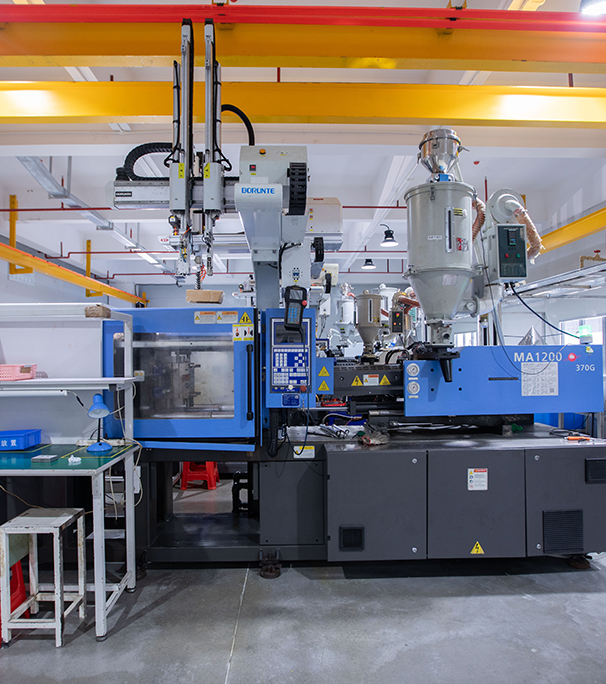
Industrial: valve bodies and pump components built to last. Complex internal geometries in valve bodies and pump housings demand consistency across thousands of cycles. Pressure die casting reproduces intricate internal channels and precisely placed port locations with minimal post-machining, reducing both lead time and scrap rates. For high-volume industrial applications, Ryobi’s die casting capability overview underscores how repeatable fill pressure and controlled solidification directly translate to longer component service life.
To see the full casting process visualized — from molten metal to finished part — the following walkthrough is worth your time:
📹 [Embed YouTube video: “Die Casting Process Explained” — visual walkthrough of injection, cooling, and ejection phases]Caption: A step-by-step visual guide showing how molten alloy becomes a precision-engineered component, illustrating why process control is everything in high-volume production.
When you stack these applications together, a clear pattern emerges — and the next section distills exactly what it means for your production strategy.
The Bottom Line: What You Need to Know
Precision die casting remains the most efficient, scalable path for manufacturing high-volume, complex metal components — and understanding its core advantages helps you make smarter production decisions.
- Die casting leads on efficiency. For complex geometries at high volume, no other metal forming process shortens the distance between raw material and finished part as effectively. Cycle times are fast, dimensional repeatability is tight, and precision die casting eliminates up to 90% of secondary machining requirements, according to OxRapid Manufacturing Research — a figure that directly compresses per-unit cost at scale.
- Aluminum is the material of choice for weight-sensitive applications. It delivers roughly a 40% weight reduction compared to steel, making it the dominant alloy for automotive structural and powertrain components where mass directly impacts fuel efficiency and emissions performance. According to Zintilon’s die casting cost analysis, material selection is one of the highest-leverage decisions in the entire process.
- Tooling is a front-loaded investment, not a recurring cost. The upfront die expense can feel steep — but it’s a one-time commitment that pays dividends across tens of thousands of parts. What typically happens is that teams focused on short-run thinking overestimate tooling risk and underestimate the savings on machining, finishing, and scrap reduction.
- Precision begins upstream. Simulation, mold flow analysis, and material selection aren’t optional refinements — they’re the foundation. Getting these right before the first shot is cast is what separates high-quality production runs from expensive rework cycles.
- Volume is the multiplier. The economics of die casting become dramatically more favorable as quantities increase, which is why it consistently outperforms alternative processes for scalable engineering.
As the industry evolves and engineering demands grow more specific, many practical questions naturally arise about process variants, material behavior, and tooling performance. The next section addresses the most common of those questions directly.
Frequently Asked Questions About Die Casting
Precision die casting generates a consistent set of technical questions — and getting clear answers helps engineers and procurement teams make smarter sourcing decisions.
What is the difference between high pressure and low pressure die casting? High pressure die casting forces molten metal into a steel die at pressures typically between 1,500 and 25,000 psi, producing dense, dimensionally accurate parts at high speed. Low pressure die casting uses controlled air pressure — usually under 15 psi — to fill the mold from below, which suits larger, structurally critical components like automotive wheels. The right choice depends on part geometry, wall thickness, and required mechanical properties. Learn more at Xometry.
Which metals are best for die casting?Aluminum, zinc, and magnesium dominate die casting applications due to their excellent fluidity, strength-to-weight ratios, and compatibility with high-pressure tooling. Aluminum is the most widely used, prized for its corrosion resistance and thermal performance. Zinc alloys offer superior dimensional stability for smaller, intricate parts, while magnesium delivers the lightest structural castings available. For a comprehensive breakdown of materials and process options, this die casting overview covers the tradeoffs clearly.
How long does die casting tooling typically last? Tool life varies by alloy and part complexity, but a well-maintained aluminum die casting mold commonly achieves 100,000 or more production cycles before requiring significant refurbishment. Zinc tooling often exceeds 1,000,000 shots given the lower melt temperatures involved. Partnering with a supplier experienced in custom mold design and preventive maintenance extends usable tool life considerably.
Can die casting achieve tight tolerances without machining? In many cases, yes. According to Kinetic Die Casting’s FAQ, typical aluminum die casting tolerances can reach +/- 0.005 inches per inch — precise enough to eliminate secondary machining on most non-critical surfaces. However, features requiring extreme precision, such as bearing seats or threaded bores, may still benefit from light finish machining to hit final spec.