A coating impact-test report is useful only when it identifies the specimen, impact direction, equipment configuration and assessment method. A number described simply as impact resistance does not establish how a coated sheet panel was tested or whether the result applies to the delivered part. Agree the test and acceptance requirement before comparing suppliers.
For sheet metal fabrication with FUMING, separate laboratory coating evaluation from the mechanical performance of a complete enclosure or assembly. This guide explains the evidence to request. It does not assign a universal impact energy or provide operating instructions for a falling-weight apparatus.
Start with the decision the test must support
Identify whether the test is intended to qualify a coating system, monitor a production process or investigate a reported failure. These objectives can require different specimens and coverage. State the represented material and production scope instead of using one result to answer every question about the finish.
A coating test on a flat coupon does not automatically establish the resistance of an assembled product to transport damage, dropped objects or service abuse. Those conditions may involve different support, geometry and failure criteria. Keep the coating requirement distinct from any assembly-level testing.
Ask the acceptance owner to identify the applicable method, revision and criterion. Do not infer the criterion from the largest value on an equipment scale or from a generic powder data sheet. The purchase record should make clear which result supports the actual release decision.
Record direct and reverse impact separately
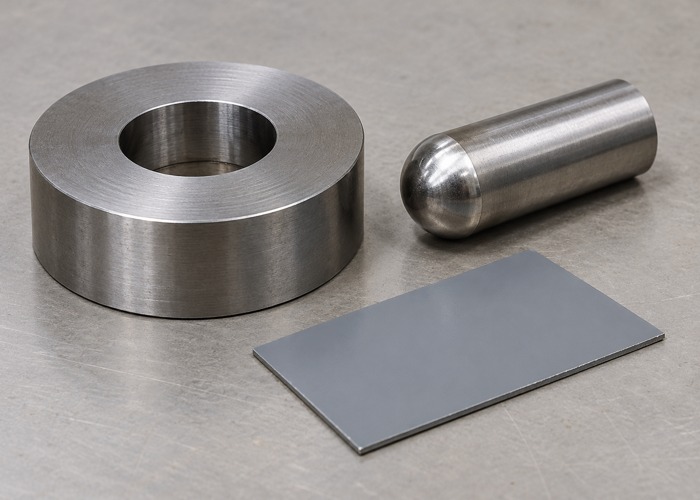
Direct and reverse impact describe different orientations of the coated specimen relative to the impact. They should be named explicitly in the test request and report. If both are required, retain separate observations rather than combining them into an unexplained single rating.
Elcometer’s introduction to impact and deformation testing distinguishes direct and indirect impact tests. Its discussion supports the need to identify which side is struck and which coating surface is assessed, rather than treating the terms as interchangeable labels.
For a specimen coated on both sides, document the relevant coating configuration. Mark the sides in the retained record without damaging the evaluated region. The reviewer should not have to infer orientation from an isolated photograph after the specimen has been handled or turned over.
Keep the apparatus configuration with the result
Record the specified impactor and die configuration, the load and height information required by the method, and the units of the reported result. A similar nominal energy does not by itself prove that two different setups impose equivalent conditions on the specimen.
The Elcometer 1615 overview describes a variable impact tester with different available configurations. For procurement review, this means the instrument model alone is insufficient: the installed configuration and applicable procedure should also be identified.
Retain equipment identification and the checks required by the laboratory procedure. If a setup changes between groups, keep those groups distinct. A report should not imply that every specimen was evaluated under one common configuration when the recorded work used several.
Describe the panel before it is tested
Identify substrate material, thickness, preparation, coating system and relevant lot references. Include the coating condition and required conditioning before testing. These fields allow reviewers to understand the specimen instead of treating the coating name as a complete description of its behavior.
When a witness panel represents a production lot, explain how it was prepared and processed. A spare laboratory panel with an unknown history cannot silently represent a fabricated enclosure. Any difference between the specimen and the delivered product should remain visible in the decision.
Connect the specimen to its film-thickness record. A thickness value from an unrelated part is not a strong basis for comparing test results. Record the relevant location and measurement relationship rather than adding a nominal value to complete a form.
Separate an observation from a pass decision
State what was examined after impact and how damage was assessed under the selected procedure. Keep the observation, location and acceptance criterion together. A pass checkbox alone loses information that may be needed when another laboratory or customer reviews the panel.
The Elcometer 1615 operating instructions describe the equipment and procedure framework. The current applicable test method and project requirements still govern the actual examination. Do not replace them with an informal shop test that happens to use a similar device.
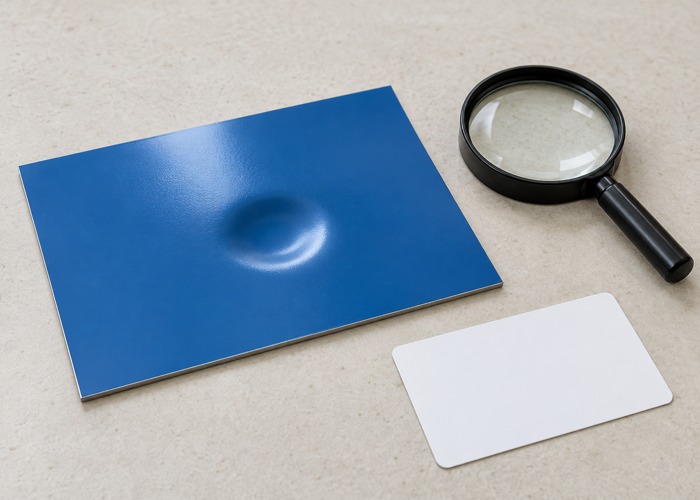
Preserve photographs with specimen identity and enough context to locate the evaluated region. A close-up can be helpful, but an unlabeled image cannot establish which impact, orientation or test condition produced the visible feature. Record limitations when fine details are not resolved in the image.
Keep the sequence and repeat strategy traceable
Identify whether each observation came from a new location or a different specimen, as required by the method. Preserve the order of testing where it matters to interpretation. Repeatedly striking an area and reporting only the final state can answer a different question from the agreed test.
If the procedure seeks a transition between acceptable and unacceptable conditions, retain the observations supporting that result. If it is a specified-condition pass or fail check, say so. Do not describe a single passing observation as a complete failure-threshold determination.
Document invalid tests and the reason for replacement. A repeat due to a recognized procedural problem should be distinguished from a repeat requested after an unfavorable valid result. Both original and subsequent records belong in the review history.
Use a report that preserves comparable conditions
| Report field | Evidence needed | Misinterpretation avoided |
|---|---|---|
| Purpose | Qualification, monitoring or investigation | One panel releases unrelated production |
| Specimen | Substrate, coating, condition and lot | Different panels are treated as equivalent |
| Direction | Direct or reverse and side identity | Opposite orientations share one rating |
| Configuration | Method, tooling and reported units | Nominal energy hides setup differences |
| Observation | Assessment and supporting images | A checkbox replaces the actual finding |
| Disposition | Criterion, scope and approver | An observation becomes unsupported release |
For supplier comparisons, establish a common basis before requesting data. If existing reports use different methods, list the differences openly. Ranking the suppliers by their largest reported number is not meaningful without understanding the underlying conditions.
Investigate failure without collapsing other requirements
A failed impact requirement does not by itself identify a single cause. Review the specimen, procedure and process records through the responsible technical team. The part-temperature cure record may contribute evidence, but it should not replace the actual impact observation.
Likewise, passing impact results do not erase failed adhesion, thickness or appearance requirements. Retain each required test and its role in acceptance. Where a concession is authorized, state the affected quantity and condition separately from a claim that the original requirement was met.
Include the final report and any unresolved scope in the quality assurance package. Keep destructive-test panels identified according to the retention plan so that a later question can be connected to the original evidence.
Buyer questions
Can direct and reverse values be combined?
Keep them separate unless the governing method explicitly defines another reporting basis.
Does a passing panel guarantee a damage-free shipment?
No. The test represents its stated specimen and conditions, not every possible handling or service event.
What should the inquiry specify?
Provide the coating, substrate, method and acceptance purpose. Contact FUMING to agree representative specimens and reporting before production.