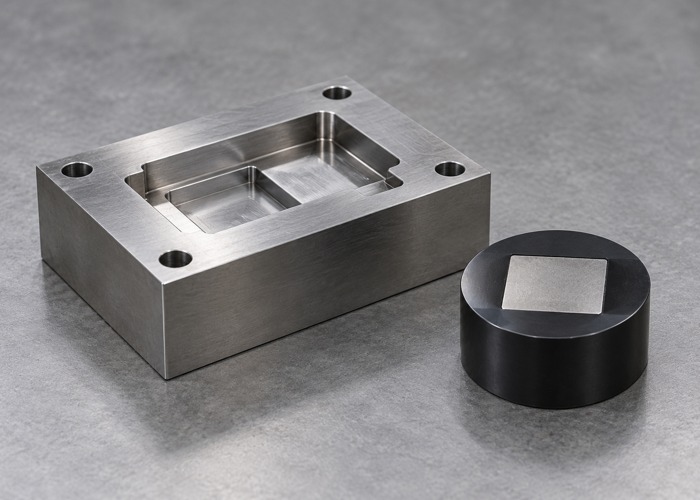
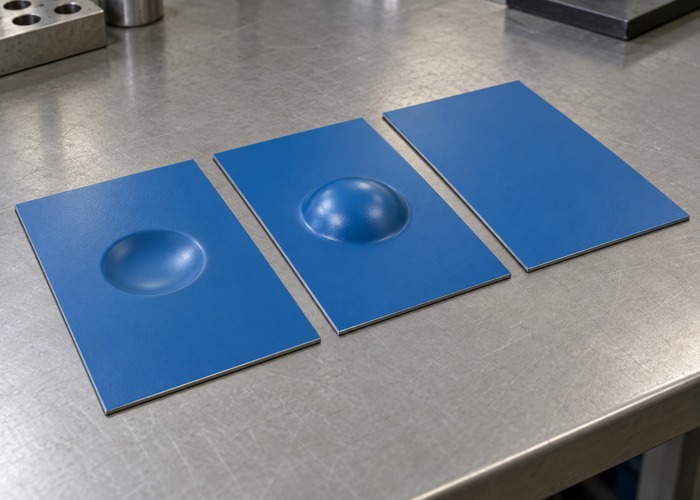
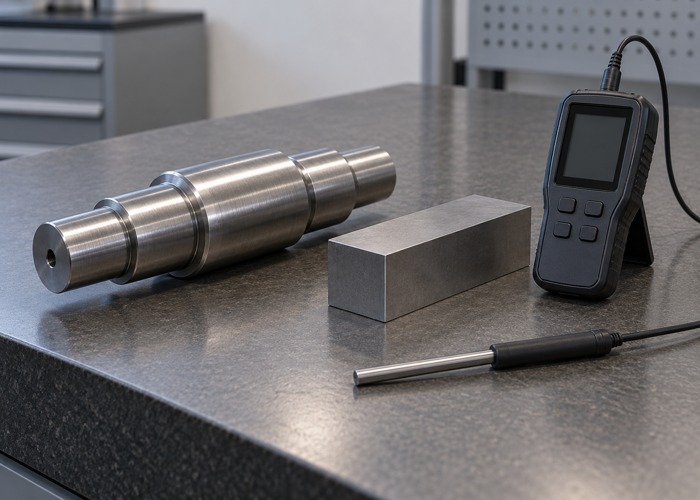
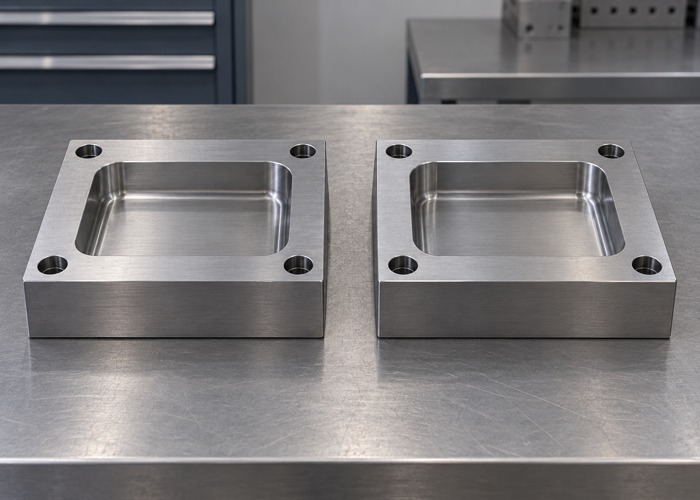
For decades, additive manufacturing lived in the corner of the engineering lab — a useful tool for mocking up concepts before “real” production began. That era is over. Today, manufacturers across aerospace, medical devices, automotive, and consumer goods are using a 3D printing service not to visualize a product, but to build it — at scale, with full structural accountability.
This isn’t a subtle evolution. It’s a fundamental redefinition of what manufacturing looks like.
The global 3D printing market is projected to grow at a CAGR of 24.3% from 2024 to 2030, according to Grand View Research — a growth rate that reflects industrial adoption, not hobbyist enthusiasm. Companies aren’t investing at that pace to make better prototypes. They’re investing because additive manufacturing now delivers the material properties, dimensional tolerances, and repeatability that end-use production demands.
The terminology shift says everything. The industry deliberately moved away from “rapid prototyping” toward additive manufacturing — signaling a change in purpose, not just process. Where the old paradigm asked, “Does this look right?”, the new one asks, “Will this perform under load, heat, and repeated stress cycles?”
That mindset change — from form to function — is what separates manufacturers who are gaining ground from those still treating 3D printing as a shortcut to a presentation model. On-demand production platforms increasingly reflect this shift, offering industrial-grade materials and tight tolerances alongside traditional methods like CNC machining.
As that functional standard rises, the next logical pressure point becomes design itself — specifically, how topology optimization is letting engineers consolidate parts, cut weight, and eliminate the failure points that traditional assemblies always carried.
Topology Optimization: Reducing Part Count and Failure Points
As established in the previous section, additive manufacturing has graduated well beyond the realm of rapid prototyping 3D printing and into genuine production environments. But one of its most underappreciated technical contributions isn’t speed or material versatility — it’s the ability to fundamentally rethink how parts are designed in the first place.
Topology optimization is a computational design approach that removes material from areas that don’t contribute to structural performance, leaving behind a geometry that’s lighter, stronger, and often impossible to manufacture through traditional subtractive methods. When paired with industrial 3D printing, the results can be dramatic.
“The real value of additive manufacturing in the supply chain is not just speed, but the ability to reduce part count through topology optimization.” — MIT Technology Review
One Part Instead of Many
In conventional manufacturing, complex assemblies are built from multiple discrete components — brackets welded together, housings bolted in sequence, fasteners holding everything in place. Each joint is a potential failure point. Each weld introduces thermal stress. Each bolt creates a maintenance liability.
Additive manufacturing collapses this complexity. What once required eight or twelve individual components can often be printed as a single, continuous geometry. The structural loads are distributed across organic lattice structures rather than concentrated at seams or fastener holes. Fewer parts also means simplified assembly workflows and reduced inventory overhead — a significant operational win in aerospace and automotive production environments.
Weight Reduction Without Compromise
Topology-optimized parts regularly achieve 40–60% weight reduction compared to their traditionally manufactured counterparts, while maintaining equivalent or superior load-bearing capacity. For aerospace applications, where every gram directly affects fuel consumption, and for automotive applications focused on EV range efficiency, that margin matters enormously.
The core benefits for industrial applications include:
- Consolidated assemblies that eliminate welded and bolted joint failure modes
- Organic internal geometries — lattice structures, hollow cavities — that subtractive machining can’t produce
- Reduced weight without thinning critical load-bearing walls
- Lower part counts that streamline supply chains and reduce inspection requirements
- Design flexibility to optimize complex component geometry before committing to production tooling
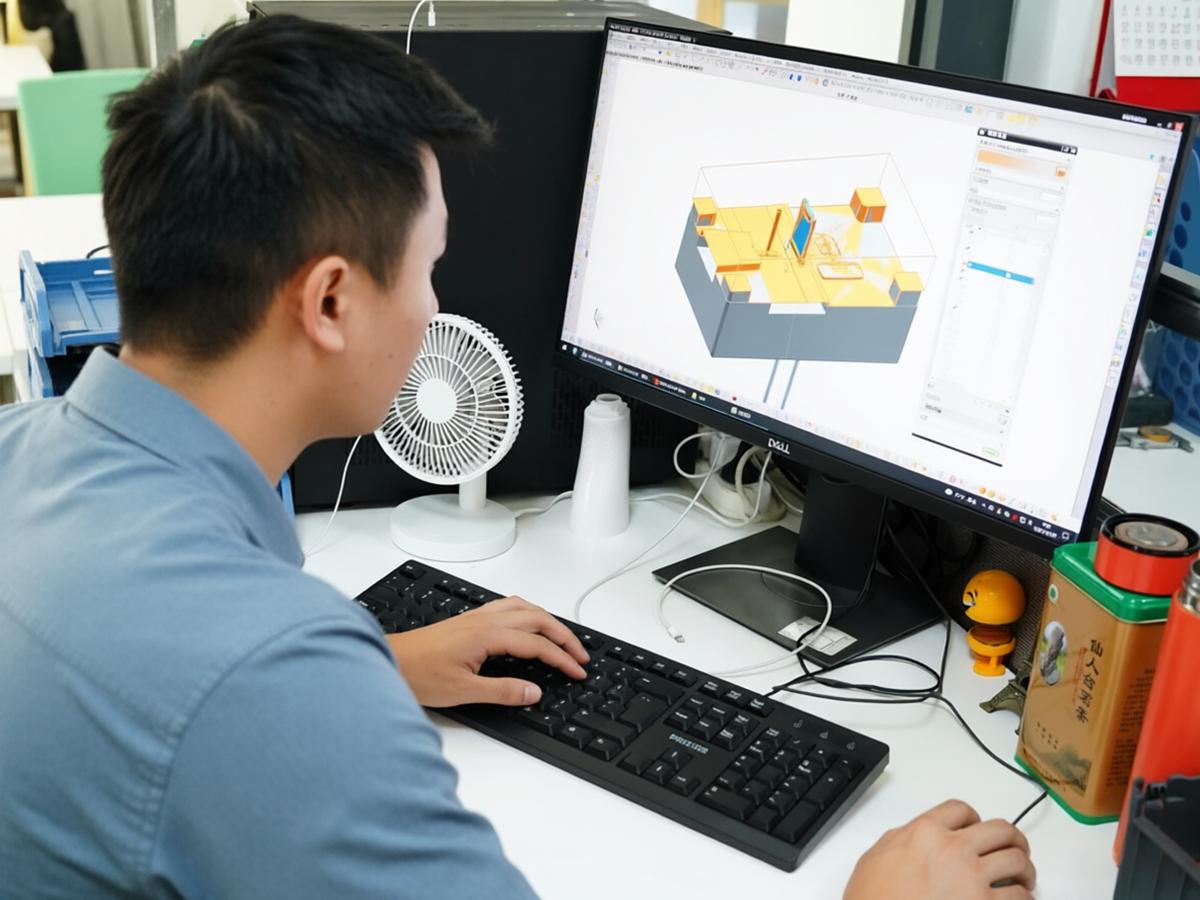
Of course, achieving these structural benefits on paper doesn’t always translate directly to a production-ready part. The printed geometry must also meet precise dimensional tolerances before it can be integrated into a larger assembly — which raises an important question about what happens after the build is complete.
The Hybrid Advantage: Bridging Additive Freedom and CNC Precision
Topology optimization, as covered in the previous section, unlocks remarkable structural possibilities — but getting from a printed part to a flight-ready component requires an additional layer of precision. Raw 3D prints, even from high-end industrial systems, frequently fall short of the tight tolerances that aerospace, defense, and medical applications demand. That gap is where hybrid manufacturing earns its place.
When Additive Alone Isn’t Enough
Straight out of the build chamber, a 3D-printed metal or polymer part typically holds tolerances in the range of ±0.010″ to ±0.020″ — acceptable for many functional applications, but not for critical mating surfaces, threaded bores, or load-bearing interfaces. Surface roughness is another limiting factor. Additive processes introduce layer lines and micro-porosity that, under cyclic stress or fluid exposure, can become failure initiation points.
In practice, engineers account for this from the design stage itself, adding deliberate stock material to surfaces that will later be finished. This isn’t a workaround — it’s a workflow.
The Role of Secondary CNC Machining
According to the American Society of Mechanical Engineers (ASME), combining 3D printing with CNC machining is the recognized industry standard for achieving aerospace-grade tolerances. A hybrid workflow typically prints the near-net shape — preserving the geometric complexity that additive uniquely enables — then hands the part off to precision machining for critical features. Post-print CNC finishing of bores, flanges, and sealing faces routinely achieves tolerances of ±0.005″ or better, meeting the demands of production-grade assemblies.
| Feature | Additive Only | Hybrid Manufacturing |
|---|---|---|
| Dimensional tolerance | ±0.010″–0.020″ | ±0.005″ or tighter |
| Surface finish (Ra) | 125–500 µin | 16–63 µin (machined zones) |
| Complex internal geometry | ✓ Excellent | ✓ Excellent |
| Critical mating surfaces | ✗ Limited | ✓ Production-ready |
| ISO/aerospace compliance | Partial | Full |
When geometric freedom meets machined precision, hybrid manufacturing delivers what neither process can achieve independently.
ISO 2768 and AS9100 compliance are non-negotiable for many industrial sectors. Hybrid workflows make both achievable without sacrificing the design advantages that additive brings to the table.
Whether you’re sourcing parts through an online 3D printing service or managing in-house production, specifying a hybrid workflow upfront eliminates costly rework later.
These precision gains don’t exist in isolation, however. The choice of manufacturing method also carries a measurable environmental footprint — something that’s increasingly shaping procurement decisions. That’s exactly what the next section tackles.
Sustainability as a KPI: Slashing Material Waste by 90%
The shift from subtractive to additive manufacturing isn’t just a story about speed or design freedom — it’s fundamentally a story about resource efficiency. Traditional CNC milling starts with a solid block of material and carves away everything that isn’t the part. In high-value applications, that can mean discarding 80–90% of the raw stock as chips and shavings. Additive manufacturing flips that logic entirely, depositing material only where the geometry demands it.
The numbers are striking. According to the U.S. Department of Energy, 3D printing can reduce material waste by up to 90% compared to traditional subtractive methods. For components machined from aerospace-grade titanium or Inconel — materials that routinely cost hundreds of dollars per pound — that reduction translates directly into measurable cost savings per part, not just environmental brownie points.
Near-net-shape manufacturing isn’t just an engineering preference; it’s a financial strategy that compounds across every production run.
For any forward-thinking 3D printing company, material conservation is now a core value proposition, not a secondary benefit. Clients specifying high-performance alloys for end-use production tooling increasingly factor buy-to-fly ratios directly into their procurement decisions.
The ESG angle matters too. On-demand production eliminates the overstock problem — parts are printed when needed, reducing warehousing costs and the carbon footprint tied to excess inventory. Batch sizes can scale to actual demand, cutting the embedded energy in every component that never gets used.
However, it’s worth noting that powder-based metal printing does generate its own material overhead, and not all unused powder is infinitely recyclable. A reputable manufacturing partner will be transparent about reclamation rates and material handling protocols. That level of process visibility is precisely what the next section explores — following a part from digital file to functional component.
Visualizing the Process: From CAD to Functional Part
Understanding how a part moves from a digital file to a finished, functional component helps demystify why industrial additive manufacturing delivers such consistent, repeatable results at speed.
[YouTube Video Embed Placeholder]
The journey follows a clear three-stage sequence:
- Design — Engineers upload a CAD file, which enters what’s known as the digital thread: a continuous, unbroken data flow connecting design intent to build parameters. Automated geometry checks flag wall thickness issues, unsupported overhangs, and tolerance conflicts before a single layer is printed.
- Print — The validated file drives the machine directly. Real-time monitoring tracks layer adhesion, temperature stability, and dimensional accuracy throughout the build. According to research on 3D printing in manufacturing, these embedded quality checkpoints dramatically reduce scrap rates compared to traditional methods.
- Post-Process — Parts move through finishing, heat treatment, or surface refinement as needed — a workflow equally relevant whether you’re producing functional consumer-facing parts or complex structural components.
A reliable digital thread doesn’t just speed production — it makes every quality checkpoint traceable, repeatable, and auditable. That traceability is increasingly non-negotiable for regulated industries. Of course, achieving this level of process integrity depends heavily on the capabilities of the partner running your production — which raises an important question about how to evaluate exactly that.
Choosing an Online 3D Printing Partner: Beyond the Instant Quote
An instant quote tool is a convenience — not a qualification. As additive manufacturing moves deeper into end-use production, the partner you choose matters as much as the process itself. Here’s what to evaluate before committing.
Vendor Evaluation Checklist:
- In-house factory vs. broker network — Direct manufacturing means tighter quality control, faster lead times, and clearer accountability. Brokers add layers of communication that can erode both.
- ISO-certified quality systems — Look for documented inspection processes, material traceability, and dimensional verification reports, not just a quality policy statement.
- Engineering support — Can the team flag DFM issues before production starts? Proactive feedback prevents costly design rework downstream.
- Material breadth — A capable partner offers validated options across polymers, metals, and composites, not just a single-process specialty.
- Scalability — The best partners support the full arc from a single prototype to volume runs without requiring you to requalify suppliers mid-project.
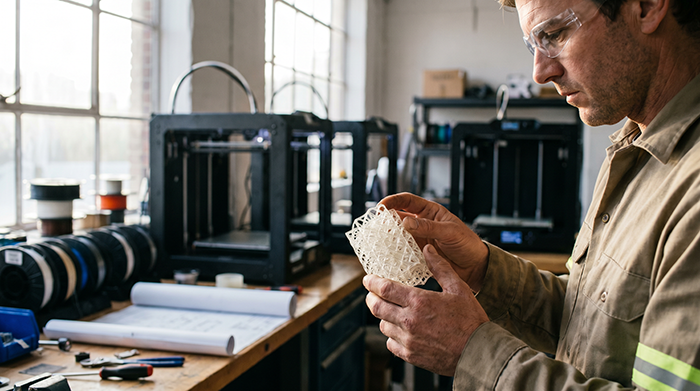
The bridge between prototyping and production is where most projects stall. A partner with genuine hybrid manufacturing capabilities — combining additive and traditional processes like custom overmolding or precision injection tooling — gives you a seamless path forward rather than a hand-off gap.
According to research on industrial 3D printing adoption, companies that integrate additive manufacturing with existing production workflows see significantly stronger ROI than those treating it as a standalone tool. Choosing a partner who understands both sides of that equation isn’t just smart — it’s essential for scaling with confidence.
Still have questions about tolerances, materials, or production volumes? The next section tackles the most common ones directly.
Frequently Asked Questions About Industrial 3D Printing
What materials work best for functional end-use parts?
Material selection depends on your application’s demands. High-performance thermoplastics — including PEEK, Nylon PA12, and glass-filled composites — are strong candidates for structural components. Metal powders like titanium, stainless steel, and aluminum alloys serve load-bearing and thermal applications. For flexible or sealing components, elastomeric and silicone-based options expand your design possibilities considerably. The right choice always balances mechanical properties, chemical resistance, and per-part cost.
How do 3D printing tolerances compare to CNC machining?
In practice, industrial additive processes typically achieve tolerances of ±0.1–0.2 mm, while precision CNC machining can hold ±0.025 mm or tighter. For many functional end-use parts, additive tolerances are entirely sufficient. Critical mating surfaces can often be post-machined to close the gap without scrapping the additive workflow entirely.
Can 3D printing handle low-volume production runs?
Absolutely — and this is where additive manufacturing genuinely outperforms traditional methods. According to research on industrial manufacturing trends, the elimination of tooling costs makes short runs of 1–500 units economically viable in ways conventional manufacturing simply cannot match. No tooling investment means faster break-even and lower financial risk on every production decision.
Key Takeaways
- Consolidated assemblies that eliminate welded and bolted joint failure modes
- Organic internal geometries — lattice structures, hollow cavities — that subtractive machining can’t produce
- Reduced weight without thinning critical load-bearing walls
- Lower part counts that streamline supply chains and reduce inspection requirements
- Design flexibility to optimize complex component geometry before committing to production tooling