Stainless steel passivation and electropolishing address different purchasing requirements. Chemical passivation is primarily a surface treatment for removing certain contamination and supporting the passive surface. Electropolishing also removes metal electrochemically and can improve smoothness and brightness. Neither process should be ordered using appearance alone as the acceptance criterion. Define the alloy, starting condition, functional surfaces, dimensional limits and required evidence before selecting a treatment.
For buyers of sheet metal fabrication services, the choice affects more than a flat sample. Bent corners, welds, holes, overlaps and assembled hardware can change what the finishing supplier must handle. This FUMING guide provides a drawing and quotation review framework for stainless brackets, covers and fabricated housings. Treatment capability and acceptance requirements must be confirmed for each project.
Separate cleaning, pickling, passivation and electropolishing
These terms should not be interchangeable on a purchase order. Cleaning removes soils such as oils that can interfere with subsequent treatment. Pickling removes scale and a surface layer. Chemical passivation addresses contamination on a suitably prepared surface. Electropolishing uses an electrochemical process to remove surface metal. A part may need several preparation steps even when the final drawing note names only one treatment.
The Australian Stainless Steel Development Association explains these distinctions in its chemical surface treatment guide. For a buyer, the useful action is to ask the supplier to describe the complete process route. A line item saying “passivate” does not establish that weld scale, grease, scratches and the final cosmetic appearance have all been addressed.
| Requirement | Discussion to have | Assumption to avoid |
|---|---|---|
| Remove fabrication contamination | Agree suitable cleaning and treatment for the alloy and starting surface | A bright surface must be free of contamination |
| Remove weld scale or heat tint | Define an appropriate preparation and descaling route | A generic passivation note guarantees weld cleanup |
| Smoother or brighter surface | Evaluate electropolishing with representative samples | Every geometry will match a flat polished coupon |
| Preserve a specified texture | Confirm the treatment’s effect on the approved finish | Process names alone define the final appearance |
| Maintain critical dimensions | Review allowable metal removal and final inspection | Finishing cannot affect a functional edge or opening |
Start with the service environment and alloy
Describe where the part will operate and how it will be cleaned. A sheltered instrument cover, an outdoor bracket and a frequently washed enclosure have different exposure and appearance priorities. Identify whether moisture can remain in seams or beneath hardware. Surface treatment does not replace an appropriate alloy or a design that addresses the actual environment.
Supply the material grade and condition, and identify mixed materials in the assembly. Ask the fabricator which components should be installed after finishing. Where dissimilar metals and moisture meet, review the separate sheet metal galvanic corrosion guide. That joint-design question cannot be resolved by specifying a shinier stainless surface.
Avoid adding an unsupported corrosion-life claim to the specification. If a service-life or qualification target is essential, have the responsible engineering team define the environment, applicable test and acceptance basis. A general finishing certificate does not by itself demonstrate performance under every installation condition.
Inspect the surface that will enter the treatment
Record the starting mill finish, abrasive finishing, weld condition and visible damage. A treatment quotation should state whether mechanical preparation is included, who removes protective film and adhesive residue, and what condition the finisher expects to receive. Without this agreement, a low treatment price may exclude the preparation responsible for much of the final result.
ASSDA’s pickling and passivation reference describes why fabrication contamination and the condition of the surface matter. Use photographs and representative samples to communicate those conditions, but keep them separate from the formal acceptance requirements. A photograph is useful for locating a concern; it is weaker evidence for a precisely specified surface characteristic.
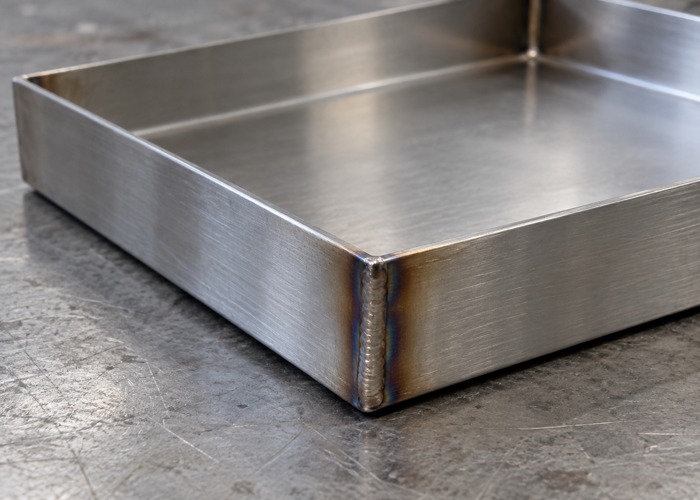
Pay special attention to welded corners
A hypothetical welded stainless tray illustrates the issue. The flat sheet may arrive with an acceptable brushed appearance, while the corner shows heat tint and a different texture. If the purchase order says only “passivate after fabrication,” the buyer and supplier may still disagree about weld blending, local color and the appearance of adjacent sheet. Specify those outcomes separately before the tray is produced.
Mark which welds are visible and which surfaces must remain accessible for finishing and inspection. Review whether a closed overlap or installed fastener could prevent access, drainage or rinsing. Ask the supplier to identify any geometry requiring a different route. Do not assume that a treatment applied to the outside of an assembly reaches every internal contact surface.
When to evaluate electropolishing
Electropolishing deserves consideration when smoothing and a brighter surface are part of the requirement. The Euro Inox guide to stainless steel finishes describes electropolished finishes among other surface options. A useful procurement trial should represent the actual alloy, prior finish and geometry, rather than an unrelated showroom sample.
Discuss edges, small holes, threads and mating surfaces with the finishing specialist. Because the process removes metal, the drawing should identify dimensions that must be verified after treatment and any areas requiring special consideration. Do not prescribe a universal removal allowance from a generic article. Ask for a process-specific proposal and validate it against the part’s functional requirements.
Electropolishing should also not be treated as a repair instruction for deep scratches, poor weld shape or unacceptable sheet distortion. Ask which defects must be corrected beforehand and which may remain visible. Compare the cost of appropriate upstream preparation with the risk of rejecting finished parts for an appearance that was never clearly agreed.
Write separate functional and appearance requirements
Use a controlled finish schedule that identifies surface zones. A customer-facing cover, an internal mounting face and a concealed welded flange need not share the same cosmetic acceptance conditions. For broader comparisons with coatings and other finishes, see the sheet metal finish selection guide. The stainless treatment decision should then be recorded at the surface level.
- Material: grade, thickness and starting finish.
- Preparation: weld cleanup, abrasive work and cleanliness before treatment.
- Treatment: process designation and the contractually applicable specification revision.
- Appearance: approved sample, viewing conditions and permitted contact marks.
- Function: final dimensions, surface texture requirements where necessary, and protected interfaces.
- Evidence: required inspection or treatment records and the applicable acceptance method.
ASTM’s B912 listing identifies a specification addressing stainless passivation by electropolishing. The linked listing is a historical edition, not a recommendation of the current contractual revision. Obtain and agree the applicable edition before using a standard designation on an order. Naming a standard does not remove the need to state supplementary part-specific requirements.
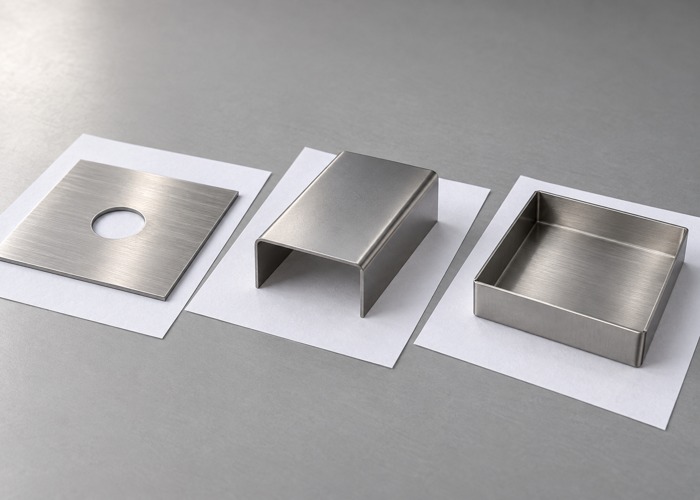
Approve a representative sample and preserve the result
A practical sample plan includes the features most likely to cause disagreement: a formed edge, a welded zone, a hole or slot, and a customer-visible face. Record the sample revision and processing route. Review the finished sample under agreed lighting and check functional features after treatment. A flat coupon can support this review, but should not replace a representative part when geometry matters.
Specify handling and packaging after approval. Clean separators, appropriate protection and controlled contact points can help prevent avoidable scratches or contamination during storage and transport. The stainless steel cleaning handbook hosted by worldstainless provides broader guidance on maintaining clean stainless surfaces. Select project-specific handling measures with the supplier rather than assuming that finishing is the final quality step.
Frequently asked questions
Is electropolishing always better than chemical passivation?
No. Choose according to the functional surface requirement, alloy, geometry, appearance and agreed validation. Additional smoothing may be useful for one part and unnecessary for another. The supplier should explain the proposed route and its limitations for the actual design.
Can I accept parts only by checking their shine?
No. Appearance and evidence of the specified treatment answer different questions. Use the agreed visual standard for cosmetics and the required records or tests for treatment acceptance. Do not infer corrosion performance solely from brightness.
What should I send FUMING for a quotation?
Send the drawing and model, alloy and thickness, quantity, operating environment, surface-zone requirements and any approved sample. Identify critical dimensions after treatment and the documentation required. The FUMING quotation form can be used to request a review of fabrication and finishing requirements together.