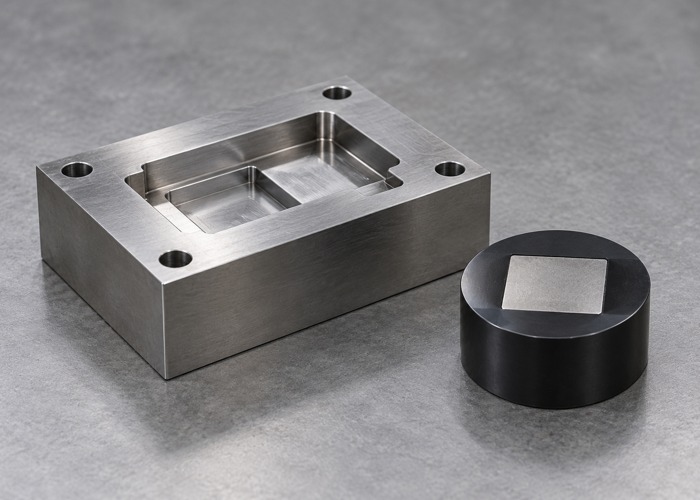
A spare mold insert is not proven interchangeable simply because its outside dimensions match a drawing. Approval should establish which mold position it fits, how its locating and functional interfaces work, and what molded-part evidence supports its use. Separate a stocked replacement from a replacement that has actually been qualified.
For a mold-making project with FUMING, define the interchangeability claim before producing the spare. Is it intended to fit one identified pocket, several positions in the same tool, or another mold of the same nominal design? Those are different scopes and require evidence appropriate to the actual agreement.
Define the interchangeability claim precisely
Start with a list of permitted insert and pocket combinations. Identify the mold, cavity position, insert revision and mating-component revision. An insert approved in one position should not acquire approval for every similar position merely because it has been placed in the spare-parts cabinet.
Clarify whether installation requires a controlled fitting operation or is intended to be a direct replacement. A spare that requires fitting may still be useful, but the maintenance plan must allow for the work and requalification. Calling it interchangeable without explaining that condition can create unrealistic downtime expectations.
DME’s Master Unit Die system is an example of interchangeability engineered around a defined frame and companion inserts. Its existence does not make unrelated custom inserts universally compatible. Apply the same discipline of defined interfaces to the specific replacement being purchased.
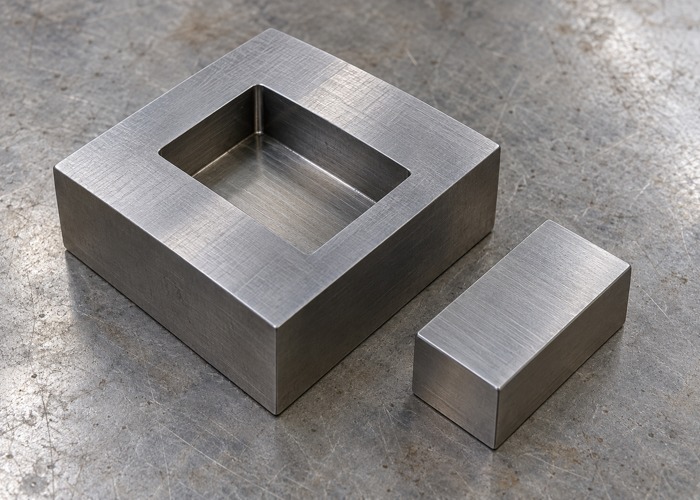
Control the locating and seating interfaces
Identify which surfaces locate the insert and which support it in service. The inspection record should refer to the controlled datums and mating geometry, not just a collection of outside dimensions. Record any designated contact, clearance or orientation requirements from the approved tool design.
Inspect the receiving pocket as well as the spare where the qualification plan requires it. A spare made to the nominal drawing may encounter a pocket that was fitted, repaired or worn during production. Preserve that history instead of assuming the present mold is identical to its original CAD model.
Do not prescribe a universal clearance or interference from this guide. Thermal condition, materials, loading and the tool designer’s intent govern the interface. The responsible tooling team should approve the actual requirements and the method used to verify them.
Include the interfaces hidden behind the insert
List relevant cooling, sealing, ejection, venting and fastening interfaces. A spare can seat physically while leaving another function incorrectly aligned or unsupported. The qualification checklist should follow the design and avoid treating visible fit as proof that hidden connections are correct.
Document seals and mating components by their controlled references where applicable. Record orientation and any installation restrictions. An unrecorded substitution of a small component can change the assembled condition even when the main insert retains the same part number.
DME’s waterline-system information illustrates that mold-change interfaces can include engineered water connections. For a custom spare, identify the actual connection design and required checks rather than assuming a convenient connection is equivalent to the approved arrangement.
Keep finishing and repair history visible
Include heat treatment, finishing, coatings and approved repair history in the spare’s configuration record when they apply. An unfinished inspection result cannot automatically release the final finished interface. State the condition in which dimensions and functional checks were evaluated.
If hand fitting, polishing or other adjustment is authorized, record what was changed and which mating combination was used. Do not keep the original drawing revision as the only record if the accepted physical condition now depends on an undocumented adjustment.
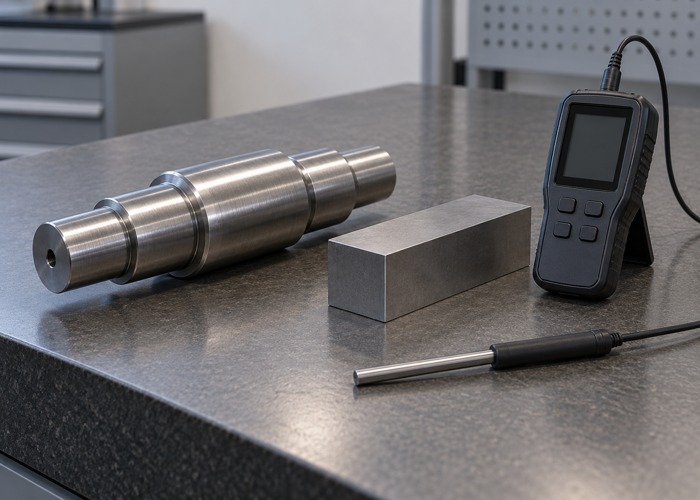
The heat-treatment evidence supports material-condition review, while the fit record supports compatibility. Neither replaces the other. Keep the references connected so a later replacement order does not reproduce only part of the approved configuration.
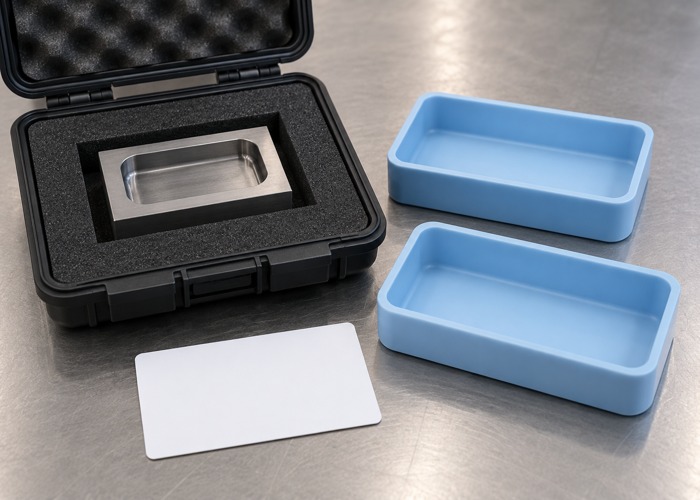
Qualify assembly without overstating what it proves
Have qualified tooling personnel conduct the required fitting and functional checks under the approved procedure. This article defines records for review, not an operating instruction for installing or cycling a mold. The procedure should address the actual tool, machine and relevant hazards.
Record whether the spare seated as intended, whether the identified interfaces were checked and whether additional adjustment was needed. A photograph of the insert sitting in a pocket is not a complete functional test record. Capture the method, observations and responsible approval.
HASCO’s quick-change mold system pairs a changing unit with specified matching inserts and a defined locking arrangement. That is another example of compatibility being a system relationship, not a conclusion drawn from the name of a component.
Plan molded-part evidence for the replacement
Identify which part characteristics can be affected by the insert and its interfaces. Agree the trial or qualification coverage before substitution. Include the relevant dimensional, cosmetic and functional observations rather than copying a generic sample checklist without considering the actual change.
Keep samples and reports tied to the installed spare, mold position and trial configuration. If several inserts are evaluated, preserve separate result groups. Combining favorable samples from different configurations can obscure whether any one replacement has met the full required scope.
Use the controlled mold trial report to record actions and unresolved findings. Do not count a completed trial as an approved spare while required measurements or dispositions remain open.
Build an interchangeability matrix
| Evidence item | Required connection | Approval limit |
|---|---|---|
| Insert identity | Serial or controlled ID to revision | Applies to the identified physical spare |
| Mating position | Insert to mold and pocket | Other positions need their agreed evidence |
| Interface inspection | Datums, seating and functional features | Inspection condition must be stated |
| Fitting record | Actual adjustments to accepted combination | Undocumented fitting is not universal compatibility |
| Trial results | Samples to installed configuration | Missing requirements remain unresolved |
| Release | Approved combination and restrictions | Future revisions require change review |
For a spare intended for several pockets, list each permitted pairing and its evidence status. Do not use a single blanket pass to hide untested combinations. The responsible engineer can define a justified qualification strategy, but its scope and limitations should be explicit to maintenance staff.
Keep the original production insert’s history when the spare is qualified. It may later return to service or serve as a reference for investigation. The records should allow reviewers to distinguish wear, repair and revision effects from differences between replacement components.
Preserve approval through storage and future changes
Store the spare with clear identity and protection appropriate to its approved condition. Keep the release status accessible without requiring the next technician to infer it from packaging. Separate qualified, unfinished, repaired and awaiting-review items in the inventory record.
Review approval when the receiving pocket, mating components or relevant design revision changes. A spare qualified against an earlier configuration may need further assessment. The change process should identify the affected pairings instead of assuming an old pass transfers automatically.
Retain the evidence in the quality assurance package. A practical handover explains which spare can be used where, what installation conditions apply and what verification remains necessary. That information makes the inventory useful when a replacement is actually needed.
Buyer questions
Does drawing compliance prove interchangeability?
It is supporting evidence. The approved mating interfaces, actual configuration and required functional results still matter.
Can a fitted spare be called a direct replacement?
Only within its documented conditions. State whether further fitting is required and which position was qualified.
What should a spare-insert order specify?
Identify the permitted mold positions, revisions and qualification evidence. Contact FUMING to agree the intended replacement scope before manufacturing.