Unstable temporary labor doesn’t just slow production — it quietly dismantles the trust your customers place in your brand, one missed deadline at a time.
For businesses that depend on consistent assembly and packaging output, the traditional temporary staffing model creates a dangerous cycle. Workers cycle in and out, familiarity with your processes never fully develops, and quality suffers as a direct result. According to Workshops Empowerment Inc. (WE Inc.), temporary staffing agencies can lead to high turnover, which directly disrupts assembly and packaging fulfillment requirements — a pattern that compounds with every new hire.
The real cost isn’t just recruiting fees — it’s the operational chaos that follows every vacancy.
The business challenges this volatility creates are concrete and measurable:
- Missed fulfillment windows: When a shift is understaffed, packaging timelines slip, shipments get delayed, and retail partners lose confidence in your reliability.
- The retraining tax: Every replacement worker requires onboarding time, supervisor attention, and a temporary dip in output quality — a hidden cost that rarely appears on a staffing invoice.
- Eroded brand credibility: A company that wants to say “we offer quality products” can’t back that promise up when inconsistent hands are assembling those products daily.
Scaling a local business operation requires more than access to warm bodies — it demands a workforce that knows your standards, owns your processes, and shows up with consistency.
The foundation of any scalable operation is a stable workforce — and that starts with rethinking who you actually partner with.
Defining the ‘Service Provider’: More Than Just a Vendor
Understanding who you’re partnering with determines whether your operations stabilize or continue cycling through the same disruptions outlined above.
Definition Box — Providing Company: According to Law Insider, a providing company is legally defined as an entity that delivers specific services under a structured agreement to meet business needs. This providing company definition distinguishes a true service partner from a simple transactional vendor.
In a B2B context, the distinction matters enormously. A vendor fulfills orders. A strategic service provider fulfills commitments — absorbing complexity, maintaining quality standards, and adapting when your volume spikes without warning. A vendor sells you labor; a service provider sells you outcomes. That shift in accountability changes everything downstream: communication structures, error resolution, performance expectations, and ultimately, your customer satisfaction rates.
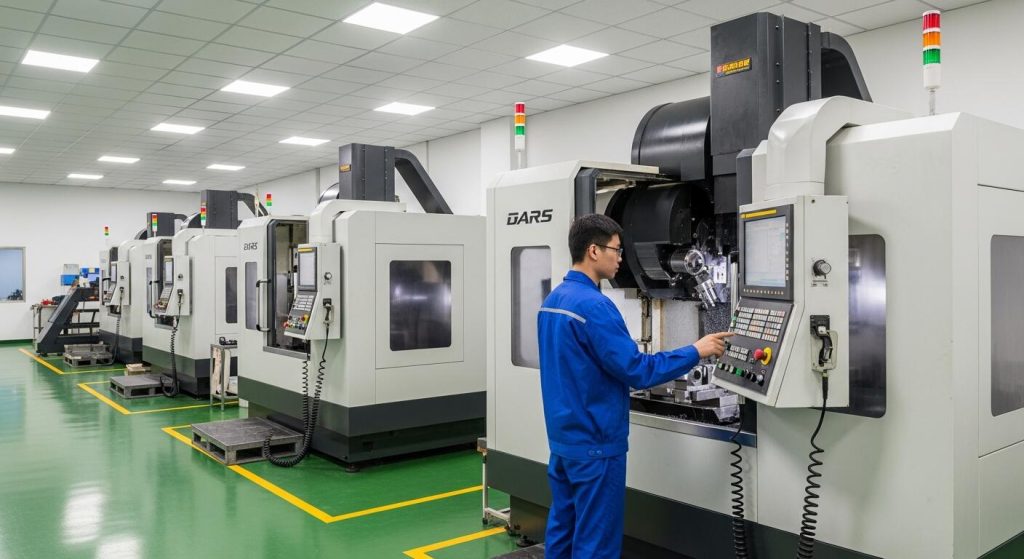
A network of trained specialists also delivers compounding value that a basic labor pool simply cannot replicate. In practice, when a workforce is purpose-built around specific operational tasks — retail assembly, kitting, packaging — each associate brings accumulated process knowledge rather than starting from scratch. According to scalable operations research, businesses that invest in structured service partnerships build more resilient systems than those relying on interchangeable temporary headcount.
Key Terminology: Providing Company | Strategic Service Partner | Outcome-Based Accountability | Dedicated Workforce
Recognizing this difference is the first step — but the real question is what that kind of purpose-built, accountable workforce actually looks like in practice.
Remember: the right service provider doesn’t just fill seats — they protect your brand’s reliability at scale.
The Solution: Leveraging a 100-Person Dedicated Workforce
Reliable workforce scale isn’t just a numbers game — it’s the structured foundation that transforms chaotic internal operations into consistent, outsourced output businesses can actually count on.
This is precisely what makes the WE Inc. service provider case study so instructive. Rather than patching gaps with rotating temp hires, WE Inc. built something fundamentally different: a stable, trained, and mission-aligned team ready to absorb real production demand.
WE Inc. maintains a dedicated workforce of over 100 enthusiastic associates dedicated to handling business outsourcing needs — a pool large enough to flex with volume spikes while maintaining the consistency that temporary labor models can rarely deliver.
That scale only matters, however, if the people within it are genuinely prepared. WE Inc. associates receive specialized training in ”WE Made” retail production — a hands-on curriculum that develops precision across assembly, packaging, and quality control workflows. What typically happens in less structured environments is that institutional knowledge walks out the door with each turnover cycle. Here, that knowledge is embedded in the process itself.
The physical infrastructure reinforces this reliability. Handling complex, multi-stage assembly and packaging requires organized workspace design, documented workflows, and clear quality checkpoints — all of which WE Inc. has developed to support consistent throughput at scale. As research on business operations notes, scaling successfully demands that operational systems grow alongside headcount, not after.
For local businesses drowning in internal logistics, WE Inc. represents a clean transition point — from reactive scrambling to dependable, external execution. And that dependability, it turns out, has roots far deeper than most vendors can claim.
When evaluating outsourcing partners, prioritize those with the workforce depth and embedded training infrastructure to absorb your demand without sacrificing quality.
The 120-Year Legacy: Why Stability Matters in Manufacturing
Institutional longevity isn’t a marketing badge — it’s the clearest signal that a partner has the discipline, mission, and operational depth to outlast every disruption you’ll face.
When businesses weigh their outsourcing business challenges against available solutions, one factor consistently separates trustworthy partners from transactional ones: time. Workshops Empowerment Inc. (WE Inc.) carries a remarkable legacy of over 120 years supporting employment opportunities for people with disabilities — a track record that stretches from the early 1900s to today’s complex manufacturing environment.
Consider what that timeline actually represents. Across two World Wars, the Great Depression, multiple recessions, and a global pandemic, the organization’s core mission held firm. That kind of continuity isn’t accidental. It reflects deep structural stability — leadership that plans generationally, not quarterly. For any local business evaluating a workforce partner, that history eliminates the very real “fly-by-night” vendor risk: the fear of onboarding a partner who disappears after 18 months, taking institutional knowledge with them.
That institutional knowledge compounds over decades. Processes refined across a century produce professional communication standards, consistent documentation practices, and an organizational culture that prioritizes precision. In practice, partners who’ve operated this long develop far more reliable workflow protocols than newer entrants who are still stress-testing their own systems.
A century of operation demonstrates something no contract clause can guarantee: that a partner’s values and capacity for excellence won’t erode when conditions get difficult.
The strength of that foundation sets the stage for something even more tangible — measurable improvements to your bottom line.
When evaluating a workforce partner, treat their organizational history as the most honest performance data available.
Concrete Outcomes: Maximizing Profits and Competitiveness
Outsourcing assembly and fulfillment to a dedicated labor pool delivers measurable competitive advantages that temporary staffing contracts simply can’t replicate.
When local businesses partner with Workshops Empowerment Inc. (WE Inc.), they gain immediate access to a reliable, trained workforce without absorbing the overhead costs tied to recruiting, onboarding, or managing short-term agency contracts. The result is a direct improvement in profit margins — costs that once disappeared into staffing fees stay within the business instead.
The comparison below illustrates where the real gains emerge:
| Factor | Traditional Staffing | WE Inc. Partnership |
|---|---|---|
| Workforce reliability | Variable, high turnover | Dedicated, consistent team |
| Cost structure | Agency markups + overhead | Streamlined, predictable pricing |
| Scalability | Slow, contract-dependent | Flexible, up to 100 workers |
| Training continuity | Starts over each cycle | Retained institutional knowledge |
| Community impact outcomes | Minimal | Direct, measurable social value |
The “‘WE Made'” retail training model demonstrates this in practice. Participants develop real product assembly and fulfillment skills that translate into consistent output quality — giving partnering businesses a workforce that performs without the ramp-up delays common with temporary hires. Local companies maintain competitiveness not by cutting corners, but by building smarter operational structures around a proven labor model.
Eliminating expensive, short-term staffing contracts also frees up capital that businesses can redirect toward growth, marketing, or inventory — compounding the financial benefit over time.
What this means for local businesses: a partnership model built around dedicated, trained labor consistently outperforms reactive staffing — both on the bottom line and in operational stability.
The financial gains, however, are only part of the story — and perhaps not even the most compelling part.
The Social ROI: Corporate Responsibility as a Business Strategy
Partnering with WE Inc. delivers a return that extends well beyond the balance sheet — it connects operational efficiency directly to meaningful community impact.
“Using WE Inc. as a solution to your business challenges is a clear demonstration of active support within our community.” — Workshops Empowerment Inc. (WE Inc.)
This is the “Golden Thread” of modern corporate responsibility: every unit assembled, every order fulfilled, and every contract renewed simultaneously creates dignified, skill-building employment for individuals with disabilities. That dual purpose isn’t incidental — it’s structural. WE Inc.’s workforce model is built around providing people who face significant employment barriers with consistent, meaningful work. When a business outsources assembly or fulfillment to WE Inc., it isn’t just solving a labor challenge; it’s directly funding a pathway to independence for workers who might otherwise be left out of the mainstream economy.
The business case for this alignment is well-documented. Companies with visible, authentic CSR commitments consistently outperform competitors in brand perception and customer retention. Consumers and B2B buyers alike increasingly factor social accountability into their vendor decisions. Choosing a partner whose mission reinforces your own public values strengthens stakeholder trust in ways that traditional advertising simply cannot replicate. On the other hand, empty CSR gestures are quickly recognized — what makes the WE Inc. model credible is that the social impact is embedded in the production process itself, not bolted on as a press release.
If you’re evaluating the full value of a workforce partnership, the social ROI deserves a dedicated line in your business case.
Common Questions About Service Providers (FAQ)
Choosing the right service provider is one of the most consequential operational decisions a growing business will make — and clarity on the basics helps leaders ask better questions.
What is someone who provides a service called?
The standard business term is service provider — a person or organization that delivers a defined capability to a client. In specialized contexts, terms like specialist, vendor, or partner apply, depending on the depth of the relationship. When the engagement involves dedicated staffing and fulfillment, “strategic partner” more accurately captures the dynamic.
Is it a “company who” or a “company that” provides services?
Grammatically, “a company that provides” is the standard usage in formal business writing. While “who” occasionally appears in personified contexts, “that” is the preferred construction in professional and legal documents.
What is the primary purpose of a service-based company?
A service-based company exists to solve a defined operational problem for its clients — consistently, scalably, and cost-effectively. For workforce-focused organizations like WE Inc., that purpose extends to delivering dependable labor output so client businesses can focus on core growth activities. According to How to Scale When Business Is Booming But The Workforce Is Slim, operational agility depends heavily on the reliability of external partners.
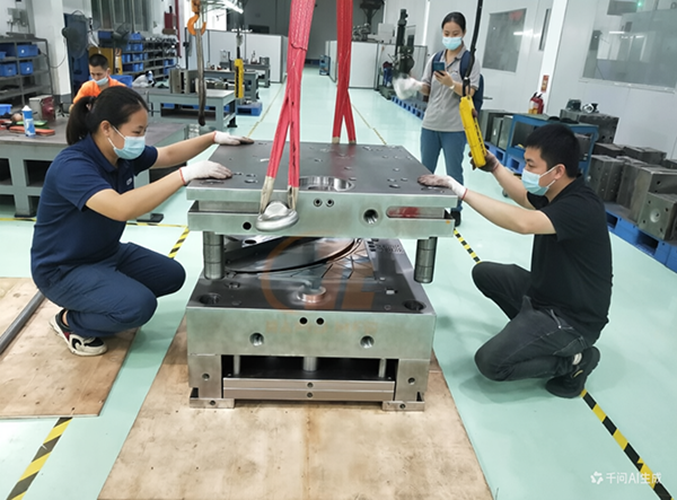
How do you identify a high-quality corporate partnership? Look for transparency, tenure, and track record. High-quality partners demonstrate longevity, clear performance metrics, and a mission aligned with yours — not just a low hourly rate.
When evaluating service providers, prioritize partners whose operational model answers these four questions confidently — those are the organizations worth building long-term strategy around.
Key Takeaways: The Bottom Line for Your Operations
Partnering with a dedicated, mission-driven workforce is one of the most operationally sound decisions a growing business can make — and the evidence supports it clearly.
As covered throughout this article, the advantages compound across every layer of your operation. Here’s what every operations leader should walk away knowing:
- Outsourcing to a dedicated 100-person workforce reduces operational volatility — predictable labor, consistent output, and fewer disruptions replace the uncertainty that comes with piecemeal staffing.
- A 120-year legacy signals reliability temporary agencies simply can’t match — institutional experience, refined processes, and a proven track record are built over decades, not quarters.
- Social ROI and business ROI are not mutually exclusive — WE Inc.’s model demonstrates that workforce inclusion and operational performance strengthen each other rather than compete.
- Pre-skilled workers arrive ready to contribute — through specialized retail training programs like ‘WE Made’, WE Inc.’s workforce is equipped for real business environments from day one.
- Choosing the right service provider is a competitive advantage — as scaling experts consistently note, workforce quality at the foundational level shapes every outcome above it.
In practice, businesses that treat their service provider selection as a strategic decision — rather than a procurement checkbox — consistently outperform those that don’t.
The data, the mission history, and the operational results all point in the same direction. The sources and references in the next section provide the full foundation behind every claim made here.
If you take one thing from this article, let it be this: workforce strategy is business strategy, and WE Inc. has built a model that proves both can win simultaneously.
Sources and Authoritative References
Trustworthy, mission-aligned partnerships are built on verified data — and the sources behind this analysis reflect that same standard of accountability.
The insights throughout this article draw from organizations that set the benchmark for workforce development, corporate purpose and operational best practices. Understanding where the evidence originates helps readers evaluate every claim with confidence.
The workforce data and mission history underpinning WE Inc.’s 100-person model comes from Workshops Empowerment Inc. (WE Inc.) (weincal.org), an organization whose track record in developing skilled, dedicated teams is central to the story told here. For context on modern corporate purpose — including how businesses define value beyond profit — the Business Roundtable and SBA.gov provide the authoritative framework that shapes today’s partnership decisions.
Scaling from a handful of staff to a 100-person operation requires both strategic thinking and clear communication. Resources like SAAStr’s guide on scaling to 100 employees offer practical, experience-grounded perspective on what that transition demands.
- Workshops Empowerment Inc. (WE Inc.) (weincal.org) — Primary workforce data and organizational mission history for WE Inc.
- Business Roundtable (businessroundtable.org) — Modern definitions of corporate purpose and stakeholder-centered business models.
- SBA.gov (sba.gov) — Framework for small business partnerships and operational growth standards.
- SAAStr / Speedinvest (saastr.com) — Practical guidance on scaling workforce operations from early stage to 100+ employees.
When your operational decisions are grounded in authoritative, mission-driven sources, you’re not just scaling a business — you’re building something that lasts.