The rules of competitive manufacturing are being rewritten — and the companies that haven’t noticed are already falling behind. For decades, the dominant metric in injection mold making was simple: drive down cost per tool. Today, that calculation has been upended by one overriding pressure: speed to market.
The question is no longer “how cheaply can we make this mold?” It’s “how quickly can this mold put a finished product in a customer’s hands?”
According to industry research from a leading industry source, 2026 is actively separating mold manufacturers into two distinct camps — those who’ve integrated digital, agile workflows and those still anchored to traditional, volume-first tooling models. One group is winning contracts for rapid product launches. The other is watching those contracts disappear.
Regionalization is accelerating this split. As global supply chains continue to shorten, brands need tooling solutions that compress lead times without sacrificing part quality. The Forbes notes that the shift toward on-demand manufacturing is “driven by the need to reduce inventory overhead and respond to real-time market fluctuations” — a reality that rigid, slow-cycle tooling simply cannot support.
The implications run deeper than just delivery timelines. They reach all the way back to the earliest design decisions — which is exactly where the next critical divide emerges.
Precision vs. Speed: Reimagining the Mold Design and Manufacturing Lifecycle
The tooling divide described earlier isn’t just about materials or machinery — it starts much earlier, at the design stage. The decisions made in the first few hours of a product development cycle have an outsized influence on everything that follows. Getting this phase right isn’t optional; it’s the foundation that determines whether a launch accelerates or stalls.
Design: Where Most Costs Are Already Decided
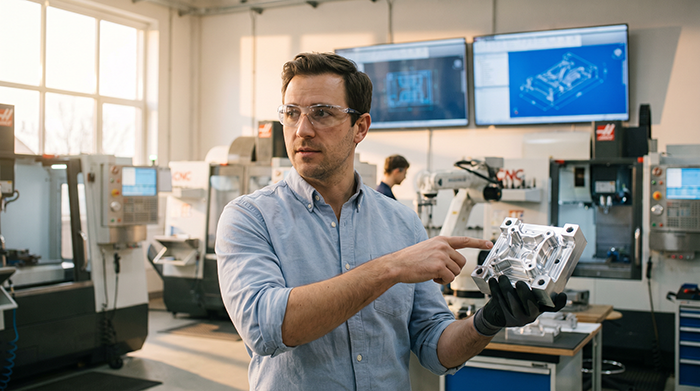
According to the National Institute of Standards and Technology, a significant portion of total product manufacturing costs are locked in during the initial design phase** — before a single tool path is cut or a mold cavity is machined. That’s a striking number. It means that by the time most teams start worrying about cost overruns, the financial outcome has largely already been written. In modern mold design and manufacturing, the smartest investment isn’t in faster machines — it’s in smarter decisions made earlier. Teams that treat DFM (Design for Manufacturability) as an afterthought are essentially committing budget before they know the full picture. Explore our design and manufacturing resources to see how early-stage decisions can be structured to avoid downstream cost traps.
Simulate: Catching Failures Before They Happen
A common pattern in competitive tooling shops is the use of AI-driven simulation to stress-test designs virtually before committing to hard tooling. This matters because many new designs encounter critical failures during prototyping and initial tooling stages** — failures that are almost always preventable. Simulation tools can model fill behavior, cooling efficiency, wall thickness inconsistencies, and gate placement, identifying problem areas in hours rather than weeks. The practical result is fewer costly rework cycles and faster sign-off on tool builds.
Iterate: The Compressed Decision Loop
What’s changed in 2026 isn’t just the tools — it’s the tempo. The CAD-to-mold decision loop has compressed dramatically. Production tooling workflows that once stretched across months now run in weeks when simulation, DFM review, and rapid prototyping are integrated from day one.
The teams winning product launches aren’t moving recklessly — they’re front-loading precision so that speed downstream becomes inevitable.
This tighter loop sets the stage for the next evolution: engineering the mold itself to perform smarter, not just faster.
Advanced Engineering: Conformal Cooling and Smart Molds
Where the previous section explored how design and manufacturing cycles are compressing, the real competitive advantage in 2026 is being forged inside the mold itself — through thermal engineering and embedded intelligence that most facilities haven’t yet adopted.
Conformal Cooling: Rethinking Heat Management
Traditional straight-drilled cooling channels follow the path of least resistance, not the geometry of the part. Conformal cooling channels, by contrast, are 3D-printed directly into mold inserts and trace the contours of the cavity wall. The result is dramatic. According to research published by Journal of Materials Processing Technology, conformal cooling can reduce cycle times by up to 40% while significantly minimizing part warpage — a compounding advantage across high-volume runs.
Every second shaved from a cooling cycle multiplies across millions of shots, turning a thermal engineering decision into a long-term financial one.
| Feature | Traditional Cooling | Conformal Cooling |
|---|---|---|
| Channel geometry | Straight-drilled lines | Follows part contour |
| Cooling uniformity | Inconsistent | Highly uniform |
| Cycle time impact | Baseline | Up to 40% reduction |
| Warpage risk | Higher | Significantly lower |
| Tooling cost | Lower upfront | Higher upfront, lower long-term |
| Manufacturing method | Conventional machining | Metal 3D printing / precision CNC work |
Smart Molds and IoT Integration
Beyond cooling, smart molds embedded with IoT sensors are transforming quality control from reactive to predictive. Sensors track cavity pressure, temperature distribution, and cycle-by-cycle performance data in real time — flagging wear patterns before they translate into defective parts or costly downtime.
For any experienced custom injection mold manufacturer, this shift toward data-driven tooling isn’t optional in sectors where precision is non-negotiable. The automotive and medical industries, for example, routinely require tolerances of +/- 0.05mm — a standard that demands both consistent process control and reliable tooling health monitoring.
On the other hand, implementing smart mold infrastructure does require upfront investment in both hardware and data integration. It’s worth acknowledging that not every application justifies that cost — context matters.
These engineering advances don’t exist in isolation, however. Their full impact depends heavily on the materials chosen for the mold itself — a decision that’s becoming far more nuanced heading into 2026.
Strategic Material Selection: Aluminum vs. Steel in 2026
Choosing the right mold material isn’t a one-size-fits-all decision — it’s a strategic call that directly impacts your timeline, budget, and production ceiling. As the previous sections highlighted, smart engineering starts long before the first shot is ever pulled. Material selection is where that strategy gets real.
Modern rapid prototyping molds leverage aluminum and softer metals precisely because speed and adaptability matter more than raw durability in early-stage development. But the moment volumes scale, the calculus shifts entirely.
When to use aluminum: Aluminum tooling is the clear choice for prototyping, bridge tooling, and low-to-mid volume runs — typically up to 10,000–50,000 parts. Machining is faster, costs are lower, and design revisions can be incorporated without scrapping expensive hardened steel. For products still in market validation, aluminum keeps your options open.
When to use steel: Hardened steel earns its place in high-volume production tooling where part counts reach hundreds of thousands or millions. The upfront investment is significantly higher, but the per-part cost drops dramatically over a long run. Steel also handles abrasive or glass-filled materials that would prematurely wear softer tooling.
The quotable reality: Material selection done right is a force multiplier — the wrong choice doesn’t just cost money, it costs market windows that competitors will happily occupy.
Beyond the aluminum-versus-steel debate, a third variable is reshaping material strategy in 2026: sustainability. Eco-friendly resins and bio-based plastics are moving from niche to mainstream, driven by both regulatory pressure and consumer demand. Manufacturers integrating multi-material part capabilities early are better positioned to accommodate these emerging materials without retooling from scratch.
The right material decision today sets the foundation for agile production — but it’s only one piece of a larger risk management puzzle that’s increasingly tied to where your tooling is actually built.
De-Risking the Supply Chain: The Case for Regionalized Rapid Manufacturing
Building on the material strategy decisions covered earlier, there’s a broader operational risk that product teams can’t afford to ignore in 2026: supply chain fragility. Tariffs, port congestion, and unpredictable cross-border delays have fundamentally changed how smart manufacturers think about sourcing their tooling.
Regionalized rapid manufacturing is the direct response to that volatility. Rather than consolidating all tooling work with a single overseas supplier, forward-thinking teams are distributing risk across geographically strategic hubs. In practice, this means faster iteration cycles, lower exposure to import duties, and the ability to pivot quickly when a market shifts.
The “1-day lead time” advantage isn’t a marketing phrase — it’s a genuine competitive lever. When a design revision needs a quick prototype run, waiting three weeks for overseas tooling simply isn’t viable. Regionalized partners with strong aluminum mold making capabilities can turn around tooling in hours rather than weeks, which compresses the entire product validation cycle and keeps launch schedules intact.
The supply chain hedge benefits include:
- Tariff insulation — Regional hubs reduce exposure to shifting import duties that erode margin unpredictably
- Logistics predictability — Shorter shipping distances mean fewer customs delays and more reliable delivery windows
- Faster engineering feedback loops — Proximity to the team means real-time problem-solving, not inbox delays across time zones
- Redundancy built in — A distributed tooling strategy prevents single-point-of-failure scenarios
- Quality alignment — Partners who understand Western engineering standards close the gap between low-cost production and first-part accuracy

The core question product teams are asking in 2026 is exactly this: “Who can help me get from idea to reliable, scalable production, quickly and with fewer surprises?” That question is driving serious reconsideration of where tooling gets made — and why. You can even see these processes in action to understand what modern rapid manufacturing actually looks like at the shop level.
These questions come up constantly, and the next section addresses the most common ones directly.
Frequently Asked Questions About Modern Mold Making
What is a hybrid mold making workflow?
A hybrid workflow combines rapid tooling methods — like aluminum molds or 3D-printed inserts — with traditional production tooling processes to accelerate early-stage launches without sacrificing final-part quality. In practice, teams run initial market validation with faster, lower-cost tooling, then transition to hardened steel molds once volumes justify the investment.
How does automation benefit mold making quality?
Automation through digital mixing and IoT monitoring ensures consistent quality and reduces material waste across production runs. According to Artmolds.com, digitally controlled processes eliminate the variability that manual handling introduces — a critical advantage when part tolerances are tight and rejection rates are expensive.
Why are sustainable materials becoming a requirement in 2026?
Regulatory pressure and customer expectations are converging to make sustainability a baseline, not a differentiator. As Modern Machine Shop highlights, mold makers are actively rethinking material cycles and energy consumption to meet evolving compliance standards — particularly for products entering European and North American markets.
What is the difference between prototype and bridge tooling?
Prototype tooling validates form, fit, and function — typically using softer materials like aluminum — while bridge tooling fills the gap between validation and full-scale production. Bridge tools are designed to handle moderate volumes reliably, making them essential for teams managing phased launches or supply chain uncertainty.
Understanding these distinctions positions product teams to make smarter, faster decisions — exactly the kind of strategic clarity that will define competitive advantage heading into 2026.
Conclusion: Choosing Your Camp in the New Era of Manufacturing
The mold making divide is real, and it’s widening. As both industry data and manufacturing analysts confirm, the companies pulling ahead in 2026 aren’t the ones with the heaviest steel — they’re the ones with the fastest feedback loops. Agility is no longer a competitive advantage. It’s the baseline.
The most important decision a product team makes isn’t which material to use — it’s which partner can carry them from first shot to full production without losing momentum.
That transition point, from validated prototype to scalable output, is where launches succeed or stall. Whether you’re developing consumer-ready product components or tooling up for a complex multi-part assembly, you need a manufacturing partner who understands both sides of that equation.
Don’t let tooling decisions become bottlenecks. Start with a free DFM analysis from Oxrapid to identify risks early, choose the right mold strategy, and move from concept to production-ready parts with confidence.