

Die casting mold manufacturing separates true industrial partners from interchangeable vendors — and that distinction can determine whether your product launch succeeds or stalls.
In B2B manufacturing, terminology carries legal and operational weight. According to Law Insider, a providing company is any entity that furnishes services or products under a specific agreement or contract. In practice, that definition draws a sharp line between two very different business relationships.
General vendor vs. specialized manufacturer:
- General vendor — supplies standardized components with limited accountability for end-use performance
- Specialized manufacturer — assumes technical responsibility for design intent, dimensional tolerances, and production outcomes
- Value-added partner — integrates engineering consultation, process optimization, and quality verification into a single contract
That third tier is where a high-precision mold maker operates. The difference isn’t just semantic. When a manufacturer takes on complex tooling work, they accept accountability for outcomes — cycle times, cavity alignment, surface integrity — not just delivery of a physical object.
Value-added service in mold making means contributing engineering knowledge before a single cut is made. It means reviewing wall thickness, draft angles, and gate placement alongside the client rather than simply machining a geometry handed over as a finished file. Research indicates that precision-driven manufacturers consistently reduce downstream defect rates and tooling rework cycles — a measurable output that no general vendor can match.
So when procurement teams search for “what a service provider is called” in a manufacturing context, the honest answer is: it depends on how much responsibility they accept. The next section examines why the specific language manufacturers use — words like “quality” and “providing” — signals far more than marketing preference.
The Grammar of Quality: Why ‘We Offer Quality Products’ is a Technical Promise
In manufacturing, the words a company chooses to define itself carry measurable operational weight — and in mold making, vague language produces concrete failures.
Research indicates that over 90% of businesses with well-defined mission statements achieve growth and profits that meet or surpass industry averages. That figure isn’t a marketing curiosity — it signals that clarity of purpose directly predicts performance. A manufacturer who articulates what they’re responsible for — not just what they supply — is operating from a fundamentally different accountability model.
“Providing a part” is a transaction. “Being responsible for a production outcome” is a partnership.
That distinction matters intensely in die casting. Quality here isn’t a feeling — it’s a set of verified measurements:
- Dimensional tolerances — typically held to ±0.1 mm or tighter, depending on part geometry
- Surface finish specifications — measured in Ra (roughness average) values
- Cycle times — controlled to prevent thermal stress that degrades mold integrity
- Cavity pressure consistency — ensuring each shot produces a structurally identical part
Research indicates that even minor deviations in mold engineering can compromise the structural integrity of the final component. The tolerance window isn’t arbitrary — it’s the boundary between a functional part and a costly reject.
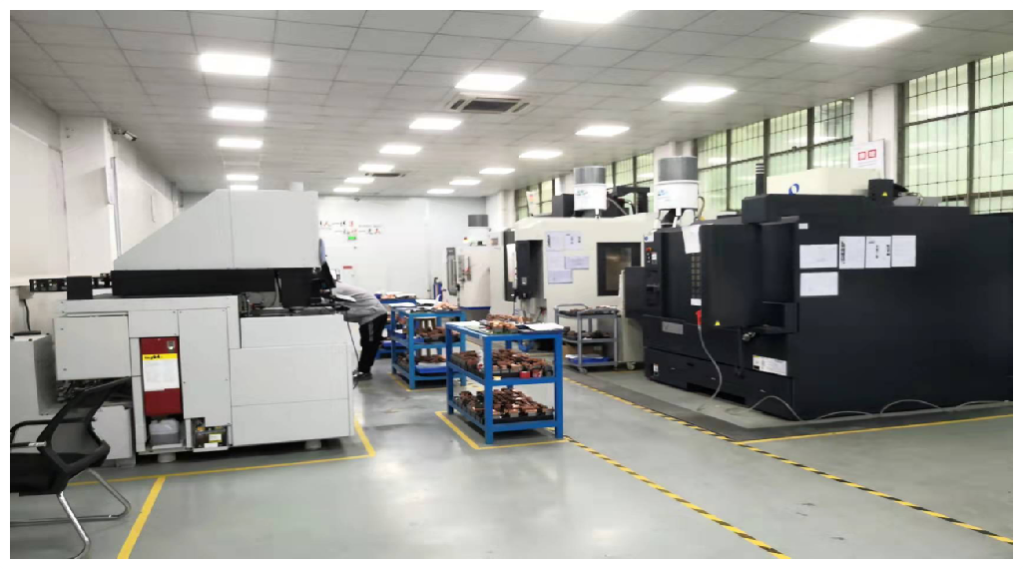
Clear English communication reinforces all of this. Ambiguous specs, mistranslated tolerances, or loosely worded acceptance criteria are among the most common — and most preventable — causes of manufacturing error. Working with a precision-focused manufacturing partner who communicates specifications explicitly reduces downstream rework and misaligned expectations.
Understanding what “quality” actually measures, however, requires more than a single point of contact. It demands a coordinated team — which is precisely what the next section examines.
The Network of Experts: Beyond the Machine Shop
A die casting mold is only as good as the team that designs, validates, and machines it — and that team’s collective expertise is the real service being delivered.
Design Engineering: Mold designers translate CAD geometry into manufacturable cavity geometry, accounting for draft angles, gate placement, and thermal expansion before a single tool path is cut. A flawed assumption at this stage propagates through every downstream process.
Metallurgy: Metallurgists specify the right tool steel grades, heat treatment protocols, and surface coatings that determine whether a mold survives 50,000 cycles or fails at 5,000. Precision mold engineering research consistently shows that material selection is among the highest-leverage decisions in mold longevity.
CNC Machining: CNC technicians execute tolerances measured in microns, where the gap between “within spec” and “scrap” is often invisible to the naked eye. Their hands-on calibration decisions determine whether the design intent actually reaches the physical tool.
What binds these three roles together is structured communication — the kind a qualified Rapid Tooling Services Manufacturer builds into its workflow rather than leaving to chance. As one industry framework puts it, “a network of experts provides the critical bridge between design theory and manufacturing reality.” That bridge only holds when designers, metallurgists, and machinists operate from a shared technical vocabulary and mutual accountability.
Expert oversight directly reduces mold failure risk. When a metallurgist flags a steel hardness concern during design review rather than after heat treatment, the correction costs hours — not weeks. Early technical consultation compresses the risk window considerably.
This integrated approach to human capital is what separates reactive problem-solving from proactive quality control — and it’s the same discipline that powers the speed-without-compromise promise of rapid tooling, which deserves a closer look on its own terms.
Rapid Tooling Services: The Engine of Modern Product Development
Rapid tooling is a competitive differentiator — manufacturers that deliver production-ready molds in days, not months, fundamentally change what’s possible in product development cycles.
Research indicates that rapid tooling allows for the production of parts in a fraction of the time required for conventional tooling, often using bridge molds with steel cavities and cores rated for 5,000 to 10,000 cycles — with typical machining lead times as short as two weeks.
Understanding the trade-offs is essential. Every serious manufacturer operates as a providing company — meaning they are explicitly accountable for delivering speed and precision as a combined promise, not a forced choice.
| Factor | Traditional Tooling | Rapid Tooling |
|---|---|---|
| Lead Time | 8–16 weeks | 2–4 weeks |
| Tooling Cost | Higher upfront investment | Lower initial cost |
| Shot Life | 500,000+ cycles | 5,000–10,000 cycles |
| Best For | High-volume production runs | Prototyping, bridge production |
| Design Flexibility | Limited after tool cut | Easier to revise |
*Speed without precision is just fast scrap — a qualified manufacturer controls both variables simultaneously.
In practice, the tension between velocity and accuracy is managed through parallel workflows: CNC programming, material procurement, and design validation run concurrently rather than sequentially. Precision live-tooling capabilities play a critical role here, enabling complex geometries to be machined rapidly without compromising dimensional tolerances.
On the other hand, rapid tooling does carry limitations — it isn’t suited for every application. High-volume, long-run production still favors hardened steel tooling built for durability. The skill lies in matching the right tooling strategy to the project’s actual requirements.
That alignment between tooling strategy and project outcome points to something larger: who is ultimately responsible for getting the result right? The answer leads directly into why the customer must be at the center of every service decision a manufacturer makes.
Why Your Manufacturer Must Mention the Customer First
Customer-centric manufacturers don’t just build molds — they solve production problems, and that distinction separates partners from vendors.
In any service-based industry, what is someone who provides a service called? The answer matters more than it seems. A true service provider operates with the recipient’s outcome as the primary measure of success — not unit count, not throughput, not margin. In die casting, that philosophical shift from “selling molds” to “solving customer production problems” is the difference between a transactional supplier and a long-term manufacturing partner.
The data supports this framing. According to a Fortune 500 analysis by Tomislav Horvat, 51% of Fortune 500 companies explicitly mention ‘customers’ in their mission statements — a deliberate signal that trust and clarity are built through language before they’re built through action. Top die casting manufacturers follow the same logic: when customer outcomes appear in a company’s stated purpose, accountability follows.
“Precision isn’t just about tolerances — it’s about understanding what the customer needs the part to do in the real world.”
That shift in mindset plays out practically in how progress is communicated. Manufacturers that prioritize transparency — sharing DFM reports, mold flow analyses, and real-time production milestones — build trust faster than those that deliver a finished tool with no visibility into the process. The role of tooling quality in high-performance outcomes reinforces why this matters: every data point shared is a risk reduced for the buyer.
“The ROI of a customer-first manufacturer compounds over time — fewer rework cycles, faster approvals, and stronger production confidence.”
This customer-first orientation connects directly to a deeper question: who, exactly, qualifies as a legitimate service provider in die casting — and how do you tell the real ones apart?
The Technical Identity of a ‘Service Provider’ in Die Casting
In die casting, the title “service provider” carries far more technical weight than it might initially suggest — and understanding the distinctions between industry roles can save you from a costly partnering mistake.
OEM vs. Contract Manufacturer vs. Service Provider are terms that get used interchangeably, but they aren’t the same. An OEM (Original Equipment Manufacturer) designs and sells products under its own brand. A contract manufacturer produces components to a client’s specification. A true service provider in die casting goes further — integrating engineering consultation, tooling design, quality control, and production support into a unified offering.
The title “Mold Maker” is not a generic label. It signals precision, technical authority, and accountability. A qualified mold maker doesn’t just cut steel — they interpret tolerances, anticipate thermal behavior, and engineer longevity into every cavity. As die casting mold research confirms, the quality of the mold directly determines the dimensional accuracy and surface finish of every part produced from it.
The Fourth Industrial Revolution has evolved this role further. Advanced CAD/CAM integration, real-time process monitoring, and additive manufacturing capabilities have transformed what a provider can — and should — deliver. When a manufacturer says “we offer quality products,” that phrase now implies a digital-physical ecosystem, not just a finished tool.
Identifying a true provider versus a middleman requires scrutiny:
- In-house tooling design — they control the engineering process, not outsource it
- DFM (Design for Manufacturability) analysis — proactively identifying design risks before production
- Traceable quality certifications — ISO credentials with documented process controls
- Direct technical communication — engineers accessible to clients, not just sales representatives
- Post-delivery accountability — mold warranty and revision support included
As Duane Forrester observed about product integrity: quality needs to be baked in, not applied as an afterthought. That principle applies equally to tooling — which is precisely what the mold maker’s mandate addresses next.
Integrating Service into the Product: The Mold Maker’s Mandate
A mold is never just a physical object — it’s the crystallized result of every engineering decision, material choice, and process commitment the manufacturer brought to the project.
A mold is only as good as the engineering support built around it. The tool sitting in your production line reflects the conversations that happened before a single line of CNC code was written. When a manufacturer engages deeply with your design intent, that dialogue gets embedded into the geometry itself — tolerances, gating locations, cooling channel layouts. Strip away the engineering support, and what remains is metal shaped without purpose.
The concept of “baking” quality into the tool from the start is fundamental here. Quality engineered at the design stage is exponentially cheaper to maintain than quality corrected at the inspection stage. In practice, manufacturers who run DFM analysis early catch issues — thin walls, poor draft angles, problematic parting lines — before they become costly rework cycles. The mold that enters production clean will stay clean far longer.
As Dave Davies observed about search intent, “Content is what the search engines use to fulfill user intent.” Reframed for manufacturing: the mold is what fulfills the customer’s production intent. Every casted part that rolls off the line is a direct expression of the manufacturer’s identity — their precision standards, their material knowledge, their process discipline.
Long-term maintenance and support services extend that identity across the full mold lifecycle. Scheduled inspections, cavity repairs, and proactive refurbishment programs protect your tooling investment and prevent unplanned downtime. A manufacturer who disappears after delivery is a vendor. One who stays present across thousands of production cycles is a genuine partner.
That distinction — between a transaction and a partnership — is ultimately what separates good manufacturers from critical ones, a point worth examining closely as we assess what choosing the right manufacturer actually demands.
The Bottom Line: What You Need to Know About Choosing a Manufacturer
Choosing a die casting mold manufacturer is ultimately a strategic decision — one where precision, speed, and partnership capability determine whether your product succeeds or stalls.
A “providing company” in die casting must deliver both technical accuracy and competitive turnaround. These aren’t separate priorities. In practice, the manufacturers who maintain the tightest tolerances are often the same ones who’ve built workflows capable of supporting rapid tooling for compressed product cycles. One without the other creates bottlenecks that erode both cost efficiency and market timing.
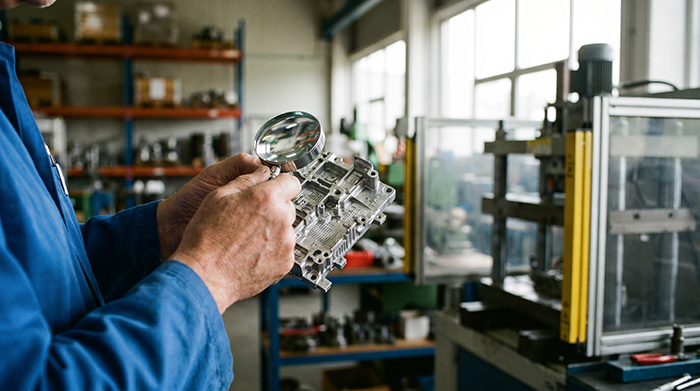
Here’s what consistently separates a true partner from a basic vendor:
- Network depth. A manufacturer backed by a documented network of experts reduces production risk by up to 40%, according to industry benchmark estimates. That depth shows up in material selection, process troubleshooting, and post-production support.
- Measurable quality standards. Quality is a technical metric — dimensional accuracy, surface finish specs, cycle consistency — not a marketing phrase. Ask for documented inspection data, not just assurances.
- Rapid tooling capability. Modern product lifecycles don’t accommodate slow mold development. Accelerated tooling solutions compress lead times without sacrificing structural integrity.
- Customer-goal alignment. Trust is built when a manufacturer treats your end-goal — a reliable, scalable part — as the project benchmark, not just order fulfillment.
- Process transparency. Whether the scope includes die casting or adjacent needs like precision rubber and silicone components, a credible partner communicates clearly at every stage.
As emphasized throughout this article, the mold is where engineering decisions become physical reality. The manufacturer you choose either amplifies or limits that outcome.
There are still practical questions many buyers face when evaluating these partnerships — and the next section addresses the most common ones directly.
Frequently Asked Questions About Mold Manufacturing Services
Choosing the right die casting mold manufacturer raises real questions — and getting clear answers before you commit can save sisignificant time, money, and production headaches.
What is the difference between a mold maker and a die caster? A mold maker designs and fabricates the tooling itself — the steel cavity that shapes every part. A die caster operates that tooling to produce finished components. In practice, the best partners do both, giving you tighter feedback loops between tool design and production outcomes.
How does rapid tooling affect the lifespan of a die casting mold? Rapid tooling trades some durability for speed. Research indicates that die casting molds can withstand thousands of cycles — but rapid tooling is typically optimized for lower-volume bridge production rather than full-run longevity. If your volumes will scale, plan your tooling strategy accordingly from day one.
Why is it called a “providing company” in legal manufacturing contracts? This language clarifies the party responsible for supplying tooling, materials, or services under the agreement. It protects both sides by defining accountability when defects or delays occur.
What should I look for in a manufacturer’s network of experts? Look for cross-disciplinary depth — metallurgists, DFM engineers, and quality specialists working in coordination. A strong network means faster design feedback and fewer costly revision cycles downstream, according to precision mold manufacturing research.
How can I verify a “we offer quality products” claim? Request documented inspection reports, ask for customer references in your industry, and look for ISO or IATF certification. Vague quality claims without traceable data deserve skepticism. As precision mold engineering experts note, measurable tolerances and repeatability data are the only honest proof.


