

Robotics manufacturing exposes a precision gap that generalist vendors simply cannot close — and the cost of that gap compounds quietly until it threatens your entire product roadmap.
The complexity behind a single robotics assembly goes far beyond producing individual components. Every actuator housing, sensor bracket, and drive enclosure must meet interdependent tolerances that only make sense when the manufacturer understands the full system. Generalist shops optimize for throughput across diverse part families. Robotics demands something fundamentally different: process integration, where material selection, machining sequences, and surface finishing decisions are made with the end application in mind from day one.
Deep hardware design knowledge is not optional in robotics — it is the product. Consider what happens when a vendor lacks expertise in housing mold development or proprietary assembly protocols. Tolerances drift. Fitment failures appear late in the validation cycle. Lead times stretch as engineering teams loop back through redesign after redesign. This is precisely why precision-driven component strategies are gaining ground over generalist approaches — the hardware itself encodes the specialized knowledge. Research from Tianjin Holding Limited, presented at IFA Berlin 2023, illustrates this dynamic clearly: company specialization in a focused product category enabled globally unique charging protocols and the smallest available product dimensions simultaneously — an outcome impossible without concentrated engineering depth.
The hidden costs of managing multiple generalist vendors compound the problem further:
- Coordination overhead — engineering time spent reconciling conflicting tolerances across suppliers
- Quality fragmentation — no single vendor owns the system outcome, so defect accountability blurs
- Slower iteration cycles — design changes ripple across multiple vendor queues instead of one integrated workflow
What looks like a cost-saving vendor diversification strategy often becomes the single largest drag on robotics development ROI. Understanding exactly what company specialization means — and why it matters differently in an Industry 4.0 context — is the foundation for changing that equation.
Defining Company Specialization in the Age of Industry 4.0
Specialization in manufacturing isn’t a label — it’s an active, measurable commitment to technical depth that separates partners who can scale precision from those who merely claim it.
“We are a company specializing in the collection, analysis, and utilization of quality and process data… providing tools designed to compete on a global stage.” — ProcessArtz
That distinction matters more than it might initially appear. Specialization is the deliberate concentration of resources — capital, talent, tooling, and data infrastructure — toward specific technical benchmarks. In practice, this means a manufacturer doesn’t just own CNC Machining equipment; they build systematic analytical frameworks around it. Every process variable, from spindle load to surface finish deviation, feeds into structured data pipelines that support compliance with international standards like ISO/TR 11462-5, which governs statistical process control in manufacturing environments. This is a fundamentally different operating model than general-purpose production.
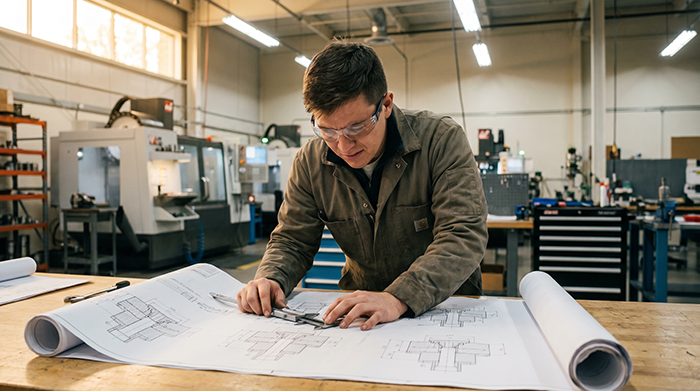
The active versus static distinction is where most procurement teams lose clarity. “Specializing in” describes an ongoing process — continuous investment in process refinement, staff certification, and measurement system upgrades. “Specialized” is a static claim that any vendor can print on a brochure. One signals a living capability roadmap; the other signals a past achievement with no commitment to evolution. For robotics manufacturers evaluating partners, this gap is operationally significant. A partner actively specializing will adapt their analytical tools as your component tolerances tighten or your production volume scales. A partner resting on a static credential will not. You can explore precision manufacturing benchmarks to better understand what active specialization looks like in documented, verifiable form.
Understanding this definition reframes how ROI calculations should work — and that financial logic is where the case for specialization becomes impossible to ignore.
The 34% ROI Advantage: The Financial Logic of Specialized Partners
Choosing a specialized manufacturing partner isn’t just a quality decision — it’s a measurable financial one that compounds across every project phase.
Specialized partners deliver an average 34% increase in ROI by eliminating the inefficiencies that generalist vendors introduce through misaligned processes, communication gaps, and repeated rework cycles. According to Mediawise Pte Ltd, specialized systems can also save up to 40% of engineering time by automating technical integrations that would otherwise require manual oversight. In practice, that time savings translates directly into faster iteration cycles, earlier go-to-market timelines, and reduced labor costs — three variables that compound quickly on complex robotics programs.
Data discrepancy is where generalist manufacturers quietly drain ROI. When a vendor lacks deep familiarity with a specific industry vertical, tolerance misinterpretations, material substitutions, and process assumptions accumulate across the production chain. A robotics program requiring precision sheet metal fabrication, for example, can suffer significant downstream consequences if the fabricator doesn’t understand how even minor dimensional variances affect servo motor housings or sensor bracket alignment. Specialized manufacturers have already internalized these failure modes — their workflows are built around preventing them, not discovering them after the first production run.
Process optimization is the third lever. Specialized partners have refined their production sequences, supplier relationships, and quality checkpoints specifically for technical verticals. That depth of refinement is what drives measurable ROI gains — not through any single dramatic change, but through consistent marginal improvements that stack across every stage. For robotics teams that require advanced multi-axis work, understanding how complex geometries are handled efficiently is part of that optimization picture.
The financial logic is clear. What’s less obvious is how the broader PCB and CNC Machining markets are actually structured — and what that structure reveals about which firms are genuinely positioned to deliver this advantage.
To Specialize or Not: Evaluating the Fragmentation of the PCB and CNC Markets
Market fragmentation in technical manufacturing isn’t a weakness — it’s a structural signal that specialized firms consistently outperform generalists where it matters most.
The global PCB market tells this story clearly. According to data from Suzhou Dongshan Precision Manufacturing Co., Ltd., the top 10 players in the global Printed Circuit Board market hold only 37.4% of total market share. That figure is striking. In most mature industries, consolidation pushes market concentration far higher. The fact that it hasn’t happened here reflects a persistent reality: technical buyers — the engineers and procurement leads at global technology companies — aren’t selecting partners based on brand size. They’re selecting based on capability depth.
Fragmentation creates opportunity for specialists. When no single player dominates, niche expertise becomes the primary competitive currency. A firm that has spent years refining tolerances for aerospace-grade PCB assemblies, or optimizing cycle times for Injection Molding of complex housings, holds advantages that a generalist operation simply cannot replicate at scale. The technical complexity of these components rewards focus. Broader portfolios, by contrast, tend to produce averaged-out competency — acceptable across the board, exceptional nowhere.
This dynamic extends well beyond PCBs. CNC machining markets follow similar fragmentation patterns, where specialized manufacturers serving specific industries — robotics, medical devices, semiconductor tooling — consistently capture premium contracts that generalists lose on technical qualification alone. Leading global technology companies have recognized this. Their supplier selection criteria increasingly weight domain-specific certifications, process repeatability data, and demonstrated experience with comparable part geometries over raw production volume.
The takeaway is practical: in highly fragmented technical markets, being the best at a defined set of processes is a more defensible position than being adequate across many. That principle sets the stage for understanding exactly which technical capabilities matter most — and why the combination of CNC machining and sheet metal fabrication deserves particular attention.
The Technical Stack: Integrating CNC Machining and Sheet Metal Fabrication
Specialized technical manufacturing creates compounding precision advantages — and nowhere is that more visible than in how CNC machining and sheet metal fabrication work together to build robotics systems.
Robotics frames don’t tolerate approximation. The structural chassis of an industrial robot must maintain dimensional accuracy across hundreds of assembly cycles, which means tolerances measured in microns rather than millimeters. Generalist shops often lack the dedicated fixturing, tooling libraries, and process documentation that hold those tolerances consistently. Specialized CNC shops, by contrast, build institutional knowledge around specific material behaviors and cutting parameters — a depth that directly shapes long-term yield performance. As the global CNC machining market approaches $128.41 billion by 2032, the competitive gap between specialists and generalists is only widening.
Sheet metal fabrication operates in close partnership with CNC work when it comes to internal component housing. Enclosures, brackets, and cable management structures must align precisely with machined mounting points — a requirement that exposes every discrepancy between vendors who don’t share a common tolerance standard. When sheet metal and CNC operations are managed under the same specialized roof, fit tolerances carry through from design intent to finished assembly rather than degrading at the hand-off. Tianjin Holding Limited (IFA Berlin 2023) demonstrates how specialized focus on hardware design to housing molds enables technical benchmarks that generalists simply cannot match.
The value-added layer — finishing, assembly, and increasingly 3D Printing for prototype validation — must be handled by the same specialized team to preserve integrity across the full production stack. When surface finishing is outsourced separately, coating adhesion specs can conflict with machined surface requirements. Integrated teams eliminate that friction by treating assembly and finishing as downstream extensions of the same precision process, not independent services. That integration also prevents the quiet cost accumulation that erodes ROI when coordination breaks down between vendors. This interconnected logic extends naturally into the manufacturing pipeline — specifically into how mold making sets the foundation for everything that follows.
From Mold Making to Injection Molding: The Precision Pipeline
The mold-to-production pipeline is where small tolerance errors compound into large-scale failures — and specialization is the only reliable safeguard.
Mold making is the foundation of every scalable robotics and production component. A mold that deviates by even 0.05mm introduces dimensional drift that multiplies across thousands of injection cycles. In high-volume runs, that drift doesn’t stay contained — it propagates through every downstream assembly step, generating scrap rates that quietly erode margins.
The flow from mold design to injection to quality inspection follows a tight logical sequence:
- Mold design and validation — tolerances are locked, material shrinkage rates are modeled
- Tool steel fabrication — hardness and surface finish are matched to the target resin
- Trial injection runs — first-article inspection confirms cavity fill and dimensional accuracy
- Production-scale molding — process parameters are frozen for material consistency
- In-process quality checks — statistical sampling validates each production batch
Specialized injection molding ensures material consistency across this entire sequence because the process knowledge lives inside a single technical team. Resin behavior — particularly shrinkage, flow rate, and warpage — varies by material family, and a team that both builds the mold and runs the press carries institutional knowledge that a split-vendor model simply cannot replicate.
The “hand-off error” between separate mold vendors and molding shops is one of the most underestimated risks in production manufacturing. When tooling accountability is divided, each party optimizes for their own deliverable, not the integrated outcome. Fit issues, undocumented engineering changes, and conflicting process assumptions routinely surface only after production has started — at the worst possible moment. Specialization is necessary for providing the structured data and analytical insights required for ISO standards, and maintaining that traceability across vendors is structurally difficult. Consolidating mold making and molding under one specialized partner is what transforms this risk into a genuine Value-Added Solution — one where accountability, documentation, and process continuity all point in the same direction. Precise rotational parts, for example, depend on the same disciplined tolerance control you can explore through high-accuracy turning capabilities as a parallel reference point.
That same principle — using early-stage precision to protect downstream production — connects directly to how 3D printing is reshaping the front end of this pipeline.
3D Printing and Rapid Prototyping in a Specialized Ecosystem
3D printing isn’t a standalone service — in a specialized manufacturing ecosystem, it’s the accelerant that compresses timelines and sharpens every downstream process.
In a specialized shop, rapid prototyping is never the destination; it’s the on-ramp to production-grade precision.
Rapid prototyping as an injection molding precursor. In practice, the most costly mistakes in injection molding happen before a single mold is cut. A specialized partner uses 3D printing to validate part geometry, wall thickness, and draft angles early — catching design flaws that would otherwise translate into expensive mold rework. This bridges the prototyping gap cleanly, and scaling into production CNC and molding becomes a structured handoff rather than a leap of faith.
3D printing for CNC jigs and fixtures. One underused application is producing custom jigs and fixtures for CNC setups directly from printed components. Instead of waiting weeks for machined tooling, a specialized team prints work-holding fixtures overnight. This keeps CNC throughput high and reduces setup variation — a direct quality multiplier across a production run.
The compounding effect of this approach is especially visible in robotics manufacturing, where component tolerances are tight and design iterations move fast. Specialized firms that serve leading technology companies worldwide — as noted in Suzhou Dongshan Precision Manufacturing Co., Ltd.’s profile on HKEX — build their competitive edge precisely through this kind of integrated, iterative capability.
Common 3D printing applications inside a specialized ecosystem include:
- Functional prototypes for fit and form validation before mold fabrication
- Custom jigs and fixtures to reduce CNC setup time and improve repeatability
- Bridge parts that fulfill low-volume demand while production tooling is completed
- Assembly aids and gauges that improve downstream quality checks
This integration is where the “value-added” timeline stops being theoretical. When rapid prototyping connects directly to CNC and injection molding under one specialized roof, every iteration costs less and teaches more — which sets the foundation for the measurable returns the next section will quantify.
The Bottom Line: Why Specialization Is Your Best Strategic Move
Specialization isn’t a positioning preference — it’s a measurable performance multiplier that produces a documented 34% ROI increase over generalist manufacturing approaches.
The evidence across earlier sections points to a consistent pattern: wherever robotics component manufacturing demands tighter tolerances, faster iteration, or tighter supplier coordination, the specialized firm outperforms the generalist every time. That gap isn’t incidental. It’s the structural result of purpose-built processes, domain-specific toolchains, and institutional knowledge that generalists simply can’t replicate at comparable cost or speed.
Consider how market fragmentation plays into this. As robotics applications diversify — from surgical systems to autonomous logistics — the technical requirements for each subsegment grow more specific. A generalist manufacturer optimized for high-volume, low-variance production is poorly positioned to serve a customer who needs 50 custom end-effector brackets with sub-0.01mm tolerances. The specialized firm, however, has already built its workflow around exactly that constraint. Precision machining capabilities designed specifically for complex geometries and tight-tolerance materials reflect that kind of intent — not accidental capability.
Engineering time is the other dimension where specialization delivers concrete savings. When a manufacturing partner has pre-integrated CNC, molding, and rapid prototyping under one technical framework, engineers stop managing supplier handoffs and start solving actual design problems. According to Mediawise Pte Ltd, specialized systems can save up to 40% of a user’s time by automating technical integrations — a figure that translates directly into shorter development cycles and reduced labor overhead.
The strategic implication is straightforward: fragmented supply chains and generalist vendors add coordination cost without adding technical value. Specialized partners compress both. For robotics teams under pressure to hit performance benchmarks and launch timelines, that compression isn’t a nice-to-have — it’s a competitive necessity. Choosing the right partner to deliver it is where strategy becomes execution, which is exactly what the final section addresses.
Choosing Your Specialized Robotics Manufacturing Partner
The right manufacturing partner isn’t just a vendor — they’re a technical extension of your robotics development team. Making that choice well means evaluating partners against criteria that go beyond price and lead time.
Dedicated industry focus comes first. A partner who works exclusively within robotics and automation brings pre-loaded knowledge of the tolerances, materials, and assembly dynamics that define the sector. That embedded understanding eliminates the costly back-and-forth that happens when a generalist shop encounters an unfamiliar application mid-project. In practice, dedicated focus compresses the feedback loop between design intent and manufactured output.

Full technical stack capability is the second filter. Robotics components don’t exist in isolation — a gripper assembly might require CNC-machined aluminum housings, injection-molded polymer guides, and sheet metal brackets, all within a single build cycle. Sourcing those across multiple vendors introduces coordination risk and schedule fragility. Prioritizing firms that consolidate CNC machining, mold making, sheet metal fabrication, and injection molding under one roof removes that friction entirely. If you’re still learning how precision turning fits into that stack, this breakdown of CNC turning explains where it adds the most value.
Oxrapid’s specialization in CNC Machining, Sheet Metal Fabrication, Mold Making, and Injection Molding for the robotics industry reflects exactly this model — a purpose-built capability set aligned to the demands of automation components, where dimensional accuracy and cycle speed are non-negotiable. That alignment is what drives shorter lead times and tighter quality outcomes rather than optimistic promises.
The 34% ROI increase documented throughout this article doesn’t materialize by accident. It’s the compounded result of domain depth, integrated process capability, and a partner who measures success in the same terms you do. Start the conversation with a specialist, not a generalist.
[YOUTUBE VIDEO EMBED: https://www.youtube.com/watch?v=gCATbt1PfW8]
FAQ
Q: What industries benefit most from specialized manufacturing partners? Robotics, aerospace, and medical device sectors see the greatest gains because their components demand tight tolerances and rapid iteration cycles that generalist shops routinely struggle to meet consistently.
Q: Does working with a specialized manufacturer actually reduce lead times? Yes. Specialization eliminates the learning curve on materials, tolerances, and process sequencing. When a shop already understands your industry’s requirements, quoting, toolpath planning, and quality verification all move faster.
Q: What should I look for when evaluating a robotics manufacturing partner? Prioritize dedicated robotics experience, a full-stack process capability (CNC Machining, Injection Molding, Sheet Metal Fabrication, 3D Printing), demonstrated quality controls, and transparent communication on lead times and revision handling.


