

Every dollar spent validating a design before tooling begins has the potential to save dozens once production starts — and in 2026, that calculation is reshaping how manufacturers approach every stage of product development.
Rapid prototyping has evolved far beyond a step in the design process. It’s now a financial and technical safeguard — the industry’s most reliable mechanism for catching costly assumptions before they harden into permanent decisions. According to Fresh Consulting, high-fidelity rapid prototypes can identify 80% of potential manufacturing defects before the tooling phase begins — a stat that reframes prototyping not as an optional creative exercise, but as a non-negotiable risk management strategy.
“The goal of rapid prototyping isn’t just to build a model; it’s to learn whether the design solves the user’s problem in the most efficient way possible.” — Interaction Design Foundation
Design debt is the hidden cost that accumulates when assumptions go unvalidated. Like technical debt in software, it compounds quietly — each unverified tolerance, each untested assembly interaction adds pressure that eventually surfaces as expensive rework, production delays, or product recalls. Physical validation breaks that cycle early.
The “fail fast, learn fast” philosophy is no longer just a startup mantra. Manufacturers treating early-stage failure as data rather than setback are compressing iteration cycles and reaching market-ready designs faster than competitors who hesitate to commit physical resources to unproven concepts. Understanding how prototyping connects to full-scale output is critical to realizing those gains without sacrificing transition efficiency.
Fidelity level matters more than most teams acknowledge. Low-fidelity models confirm form and basic spatial relationships. High-fidelity prototypes validate stress tolerances, material behavior, and real-world fit — the insights that actually move a design across the finish line.
What makes that fidelity possible in 2026 is largely a question of material selection — and that’s where the next critical decision point begins.
The 2026 Material Frontier: Choosing the Right Substrate for Innovation
Material selection is the most overlooked variable in rapid prototyping — yet it determines whether a prototype teaches you anything useful at all.
As established earlier, early validation is the core value proposition of prototyping. But that validation only holds if the prototype behaves like the intended end product. In 2026, the expansion of functional polymers and advanced metal alloys has made this increasingly achievable, even at early development stages.
As Fresh Consulting notes, using functional materials that mimic end-use plastics or metals allows engineers to perform stress tests and fit-checks that digital simulations often miss. A render cannot replicate the flex of a polymer under thermal load. A simulation cannot fully capture how two mating components wear against each other over time.
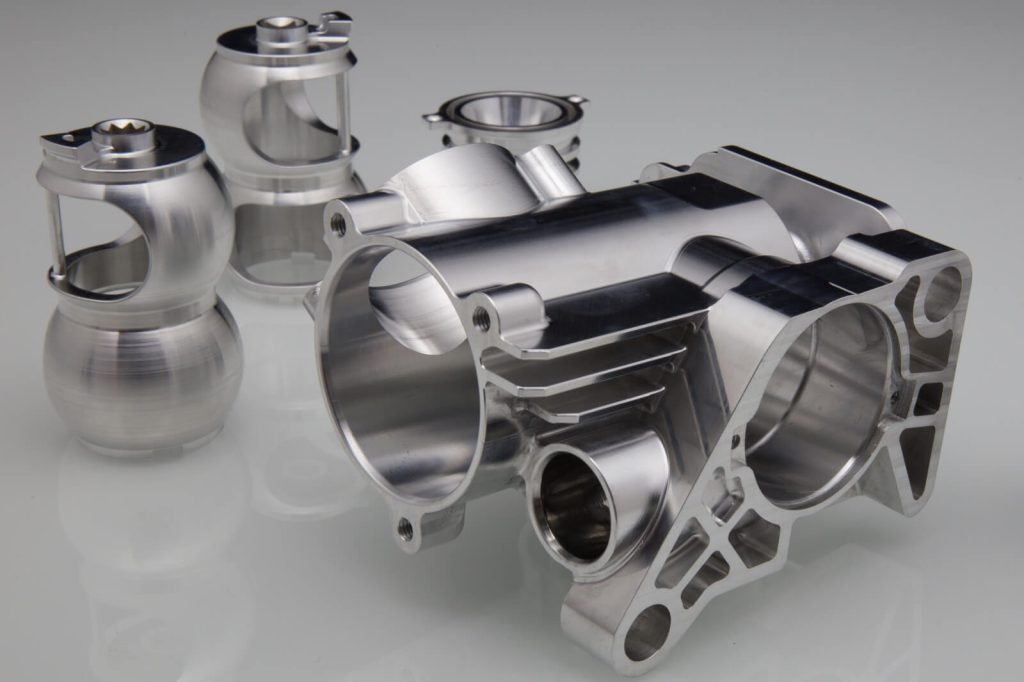
The right material doesn’t just represent the final part — it is the final part, for all practical testing purposes.
Modern 3D printing now spans a wide range of substrate categories, each suited to different engineering demands:
- Engineering-grade thermoplastics — Materials like PEEK and nylon composites offer chemical resistance and mechanical durability, making them viable stand-ins for production injection-molded parts.
- Photopolymer resins — High-detail resins support fine-tolerance fit-checks and surface finish evaluation, particularly valuable in medical device development.
- Aluminum and titanium alloys — Used in aerospace and automotive prototyping where weight-to-strength ratios and thermal performance are non-negotiable.
- Biocompatible materials — FDA-relevant polymers enable early-stage testing for implants, surgical tools, and diagnostic housings without switching substrates before regulatory submission.
- Flexible elastomers — Critical for automotive seal testing, wearable medical devices, and any application requiring dynamic loading behavior.
Industry context matters enormously here. Aerospace teams prioritize fatigue resistance under vibration cycles. Medical engineers require biocompatibility data and sterilization tolerance. Automotive developers need materials that perform across wide temperature ranges. You can explore how these material demands play out in practice across different manufacturing workflows.
What this material diversity ultimately points to is a deeper question of process. Selecting the right substrate is only half the equation — choosing the right fabrication method to work that material is equally consequential, which brings us to how 3D printing and CNC machining each serve distinct roles in a modern prototype strategy.
Hybrid Methodologies: Why 3D Printing and CNC Machining are Better Together
Additive and subtractive prototyping aren’t competing technologies — they’re complementary tools that, when combined, deliver prototype utility neither can achieve alone.
| Method | Strength | Ideal Use Case |
|---|---|---|
| 3D Printing | Speed, geometric complexity, low unit cost | Concept validation, ergonomic testing, complex internal geometries |
| CNC Machining | Precision, material integrity, surface finish | Functional testing, tight-tolerance mechanical parts, bridge production |
3D printing excels in speed. When a design team needs to iterate quickly on geometry — undercuts, internal channels, organic forms — additive manufacturing compresses what once took weeks into hours. It’s the right tool for early-stage concept validation, where the goal is learning fast rather than producing a finished part.
CNC machining, however, is non-negotiable for mechanical precision. In practice, tolerances matter enormously once a part must interface with another component, withstand load, or replicate production-grade performance. CNC machining can achieve tolerances as tight as ±0.005 inches — a threshold that most additive processes simply cannot match. For aerospace brackets, medical device housings, or automotive assemblies, that precision gap is the difference between a prototype that teaches you something real and one that teaches you nothing.
The true power of a hybrid workflow is the bridge it creates. A 3D-printed model proves the concept; a CNC-machined version proves the design. By running both in sequence — or in parallel for different sub-components — engineering teams can move from ideation to functional validation without defaulting to expensive production tooling prematurely. This is precisely the role a capable rapid prototyping service plays: offering both technologies under one roof so teams don’t lose time or context switching between vendors.
The hybrid approach also protects against a common failure mode — over-relying on a single method and discovering its limitations at the worst possible moment. Additive for form, subtractive for function. Together, they compress timelines while expanding confidence.
This technical efficiency isn’t just a workflow preference — it’s increasingly a competitive necessity, which raises a broader question: what does that pressure actually look like at the market level?
The Economic Imperative: Market Growth and Competitive Pressure
Rapid prototyping is no longer a competitive advantage — it’s the baseline entry requirement for any engineering team that expects to survive the next decade.
The numbers confirm what product teams already feel on the ground. According to Fortune Business Insights, the global rapid prototyping market is projected to surge from $4.11 billion in 2023 to $15.24 billion by 2030, representing a compound annual growth rate of 20.6%. That trajectory isn’t driven by hype — it’s driven by pressure.
Chart Description 1 — Market Growth Curve (2023–2030): A line graph illustrating the rapid prototyping market’s climb from $4.11B to $15.24B, with the steepest acceleration occurring between 2025 and 2028 as AI-assisted design tools reach mainstream adoption across aerospace, medical, and consumer electronics sectors.
Chart Description 2 — Cost of Prototyping vs. Cost of Late-Stage Failure: A bar comparison showing average rework costs when design flaws are caught at the prototype stage ($5,000–$50,000) versus post-tooling or post-launch ($500,000+), underscoring why prototype manufacturing is a risk-reduction investment, not an expense line.
AI acceleration is the critical multiplier here. Generative design tools are compressing engineering cycles from months to weeks, which means iteration speed is now a measurable competitive variable. Teams that lack a prototyping infrastructure simply can’t keep pace — their validation cycles become bottlenecks while competitors ship.
The cost of skipping prototyping in high-stakes industries — medical devices, defense electronics, automotive — is asymmetric and brutal. A single undetected design flaw can trigger regulatory non-compliance, product recalls, or liability exposure that dwarfs any prototyping budget. In practice, the question isn’t whether teams can afford to prototype; it’s whether they can afford not to.
As Weerg’s 2026 rapid prototyping guide notes, prototyping has shifted from optional validation to a structured, repeatable discipline — one that demands the right methods for each application. Which brings the conversation directly to those methods themselves.
From Concept to Reality: A Deep Dive into Prototyping Methods
Choosing the right prototyping method is as critical as the design itself — the wrong process adds cost, delays validation, and produces parts that don’t accurately represent production intent.
The method you select determines the fidelity of feedback you get. As 3D printing continues shifting toward production-ready components, understanding each process — including where prototype machining fits — becomes a genuine competitive skill.
SLA and SLS are the established standards for high-resolution plastic parts. Stereolithography (SLA) delivers exceptional surface finish and dimensional accuracy, making it ideal for visual mockups and consumer-facing form studies. Selective Laser Sintering (SLS) produces functional, durable nylon parts without support structures — better suited for snap-fit assemblies and stress-tested housings.
- SLA: tolerances as tight as ±0.1mm; smooth surfaces; limited UV stability
- SLS: isotropic strength; no support removal needed; slightly grainy finish
DMLS (Direct Metal Laser Sintering) brings metal prototyping directly into the R&D lab. By sintering metal powder layer by layer, DMLS produces fully dense titanium, stainless steel, or aluminum parts with mechanical properties close to wrought material. This is invaluable for aerospace brackets, medical implants, and any component where form-and-fit testing in plastic simply won’t satisfy structural requirements.
- Near-production material properties; complex internal geometries achievable
- Higher cost and lead time than polymer processes; post-machining often required
FDM (Fused Deposition Modeling) remains the workhorse for early-stage iteration. It’s fast, affordable, and material-flexible — engineering-grade thermoplastics like PETG and ASA allow functional part testing even in the first design sprint. Tolerances are looser, but that’s often acceptable when the goal is form and fit, not final validation.
Vacuum Casting bridges the gap between prototype and low-volume production. Silicone molds replicate master parts in polyurethane resins that closely mimic ABS or rubber, delivering 20–50 production-quality parts per tool. It’s the preferred path when engineers need realistic end-use samples for stakeholder reviews or limited field trials — before committing to hard tooling.
Knowing which process to deploy at each stage is only part of the equation. Optimizing how these methods integrate into a broader development workflow is where teams unlock the most dramatic time and cost savings.
Optimizing the Workflow: Integrating Prototyping into Agile Hardware Development
A well-structured prototyping workflow transforms iteration from a cost center into a genuine competitive weapon — but only when the process is deliberately engineered around speed and feedback.
Jigs and fixtures are the unsung accelerators of prototype validation. Rather than hand-fitting every assembly under test, purpose-built jigs enforce consistent part positioning, reduce human error, and compress assembly testing from hours to minutes. In practice, teams that invest a small amount of time printing simple fixture sets before testing begins recover that time many times over across repeated validation cycles.
Building an optimized workflow typically follows this sequence:
- Define the prototype’s purpose first. Functional testing, aesthetic review, and fit-check each demand different materials and tolerances — conflating them wastes resources.
- Build jigs and fixtures in parallel with the primary prototype so assembly testing can begin immediately upon delivery.
- Apply post-processing deliberately. Sanding, priming, painting, and surface coating aren’t cosmetic afterthoughts — they validate real-world finish requirements and reveal fit issues that raw prints obscure. Perplexity’s analysis reinforces the value of pairing digital prototypes with structured post-processing to keep the workflow lean.
- Establish a formal feedback loop. Capture stakeholder and engineer observations in structured notes, not informal conversations. Every iteration should generate documented findings that directly update the CAD model or specification sheet.
- Route specialized work externally. No internal shop excels at everything. Leveraging external precision capabilities for tight-tolerance turned components — while handling simpler prints in-house — keeps timelines tight without sacrificing quality.
Post-processing and external sourcing are workflow levers, not luxuries. Teams that treat them as optional often spend more time reworking prototypes that almost meet the requirement than they would have spent getting it right the first cycle.
Keeping this structured cadence running requires one final discipline: knowing when a prototype is good enough to stop iterating and start manufacturing. The real-world examples across aerospace, medical, and consumer electronics show exactly where that line gets drawn.
Visualizing Success: Real-World Applications and Industry Examples
Rapid prototyping doesn’t just shorten timelines — it solves specific, high-stakes engineering problems that no amount of simulation alone can fully address.
{{youtube: https://www.youtube.com/watch?v=-TDn25K-Jh4}}
As Stratasys notes, companies increasingly rely on 3D printing to validate real-world innovations before committing to mass production. The following industry examples make that case concrete.
Aerospace — lightweight complexity at scale. Aerospace engineers use additive prototyping to produce internal geometries — lattice structures, hollow channels, organic forms — that traditional machining simply can’t replicate. These prototypes let teams validate weight reduction targets and aerodynamic performance before a single production part is ordered. The margin for error is near zero, which makes physical validation non-negotiable.
Medical — precision built around the patient. In orthopedics and surgical planning, rapid prototyping enables patient-specific surgical guides and custom implants derived directly from CT scan data. A printed anatomical model lets a surgical team rehearse a complex procedure before the patient is ever in the operating room. This is where prototyping shifts from engineering tool to life-critical instrument. According to Formlabs, this capability represents one of the most consequential frontiers in the field.
Consumer Electronics — feeling the product before finalizing it. Ergonomics and user interface are notoriously difficult to evaluate on-screen. Physical prototypes let design teams assess grip comfort, button placement, and display angles with real hands — catching problems that a CAD model simply doesn’t reveal. Teams reviewing machining and manufacturing process videos can see exactly how tight-tolerance parts translate from digital file to physical object.
Automotive — iterating fast where it matters most. Engine component tolerances and interior trim fit are two areas where automotive teams iterate aggressively. Rapid prototyping compresses what was once a multi-week review cycle into days, allowing engineers to test multiple geometry variants side by side. For teams wanting to go deeper on material and process decisions, the CNC machining resource hub offers practical guidance.
These examples collectively point toward a broader pattern — one the next section will distill into clear, actionable takeaways about what modern prototyping truly delivers.
The Bottom Line: What You Need to Know About Modern Prototyping
Rapid prototyping is no longer a nice-to-have step — it is the primary risk-mitigation mechanism separating products that succeed from those that stall in costly late-stage redesign.
Here are the core takeaways every engineering and product team should carry forward:
- Prototyping catches defects early, where it matters most. Industry data consistently shows that prototyping identifies up to 80% of design defects before they reach tooling or production — a correction that costs a fraction of what downstream fixes demand. Front-loading validation is simply sound engineering economics.
- Material selection determines testing validity. A prototype built from low-fidelity stand-ins tells you almost nothing about real-world performance. High-fidelity materials that replicate final production properties — density, thermal behavior, tensile strength — are essential for functional stress testing that actually transfers to the finished product. According to the New Eagle myths breakdown, underestimating material fidelity is one of the most persistent errors teams make.
- CNC machining closes the precision gap. Additive manufacturing excels at geometric complexity and speed, but it cannot always deliver the tight tolerances required for load-bearing or mating components. CNC machining remains the benchmark for dimensional accuracy, and understanding how 3D printing and CNC work together as complementary processes — rather than competing ones — is what separates modern shops from outdated single-method approaches.
- The market trajectory signals a hybrid, AI-driven future. The rapid prototyping market is on pace to approach $20 billion by 2035, reflecting deep structural investment in digital-physical manufacturing workflows. By 2030, AI-assisted design feedback loops, generative toolpaths, and automated material selection will be standard infrastructure, not experimental features.

In practice, the teams winning in 2026 treat prototyping as a living discipline — one that evolves with their toolset. If specific questions remain about timelines, material choices, or cost structures, the next section addresses those directly.
Frequently Asked Questions About Rapid Prototyping Services
Rapid prototyping remains one of the most searched — and most misunderstood — disciplines in modern product development, so clear answers to common questions matter.
What is the difference between rapid prototyping and 3D printing?
Rapid prototyping is the broader strategy; 3D printing is one tool within it. As Wikipedia notes, rapid prototyping encompasses both additive methods like 3D printing and subtractive methods like CNC machining. The goal is speed and iteration — the manufacturing method is chosen based on material requirements, tolerance specs, and budget. A functional metal bracket, for example, may need CNC machining rather than a printed part, even within a rapid prototyping workflow.
How long does the rapid prototyping process typically take?
Timelines vary significantly by method and complexity. Simple 3D-printed concept models can be ready within 24–72 hours. More demanding functional prototypes — especially those requiring tight tolerances or specific alloys — typically take one to two weeks. Projects that involve tooling decisions, like evaluating whether agile mold-making approaches are viable, may add several days to the evaluation cycle but save weeks downstream.
Which materials are best for functional prototypes?
Material selection depends entirely on end-use conditions. In practice, engineering-grade resins and nylon work well for form and fit validation. Aluminum and stainless steel — available in standard tube and bar stock sizes — are preferred for load-bearing or thermally stressed components. The rule of thumb: prototype in the material closest to your production spec whenever functional testing is the objective.
How does rapid prototyping reduce overall manufacturing costs?
Catching a design flaw in prototype stage costs a fraction of what it costs after tooling is committed. Errors identified during prototyping eliminate expensive mold rework, scrap runs, and delayed launches. According to Protolabs’ 2026 manufacturing report, compressed development cycles directly translate to lower total product costs — making rapid prototyping one of the highest-ROI investments an engineering team can make.


